
Reviewed · COPENHAGEN WALKING TOURS
Odense: City walk – The new green Odense – City development
Odense is not simply showing you old streets and H.C. Andersen sights on this walk. It is showing you how a city changes: from industry and heavy traffic toward green spaces, cycling, housing, and new public areas. You start in the old center, reach the harbor, then return through places reshaped within just a few years.
I like the small-group format, which gives you room to ask about Danish life instead of listening to a speech from the back of a crowd. I also like the guide’s use of older photographs to make the changes clear. The main consideration is that this is a serious city-planning walk, not a classic sightseeing tour, and you should be comfortable walking about 4 km, or roughly 5,500 steps.
Key points at a glance
- See a six-lane road’s former footprint: Walk through a completed urban area that replaced a major road through central Odense.
- Follow the city from old center to harbor: The route links historic Odense with its modern redevelopment.
- Hear local context beyond buildings: Topics include housing, education, infrastructure, the economy, and everyday Danish life.
- Small groups make conversation easier: The guide can respond to questions and adjust the discussion.
- Guides bring personal insight: Jørn Asmussen is named in the feedback, while another participant identifies the guide as Johan.
- Plan for a four-kilometer walk: Wear comfortable shoes and expect a steady city stroll rather than a short old-town circuit.
Why this Odense walk is different
Most city walks help you identify landmarks. This one helps you understand decisions. You look at streets, buildings, harbor areas, and open spaces, then connect them to questions about traffic, housing, young people, and the future of the city.
That makes the experience especially useful if you have already seen Odense’s postcard sights. After a few days on your own, you may recognize the old center but still wonder why certain streets feel newly opened, why some areas have changed so quickly, or how the city hopes to keep young residents in the center. This walk gives those changes a clear thread.
The guide also discusses the Danish education system, infrastructure, the local economy, and daily life. These subjects may sound broad, but they help you read the city as more than a collection of attractions. You gain a better sense of how public choices affect ordinary residents.
The tone is conversational. The guide is there to explain, but also to answer questions. One particularly strong feature is the use of older photos, which lets you compare what you see now with what stood there before. That is far more useful than being told that an area was once industrial. You can see the difference.
More guided walks in Denmark
- Copenhagen Highlights Walking Tour
★ 5.0 · 2,324 reviews - Politically Incorrect Private Highlights Walking Tour
★ 5.0 · 1,244 reviews - Copenhagen: Group Walking Tour – City Highlights – 2 Hours
★ 4.7 · 1,088 reviews
Starting at Overgade 3 in the old center
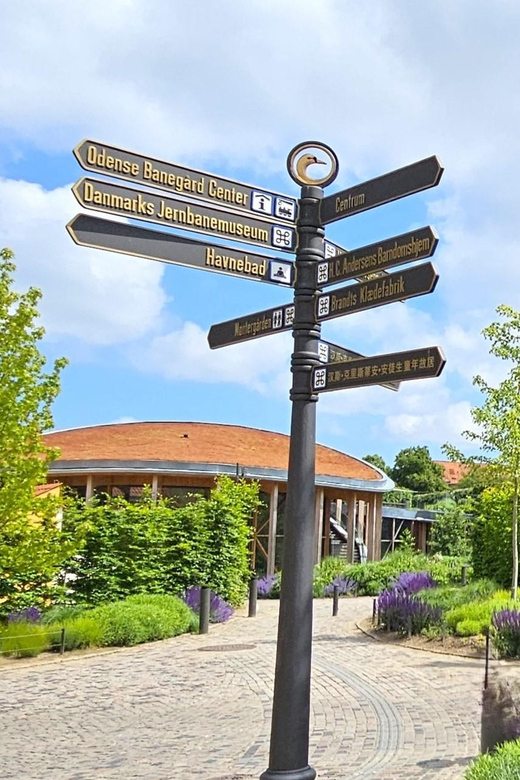
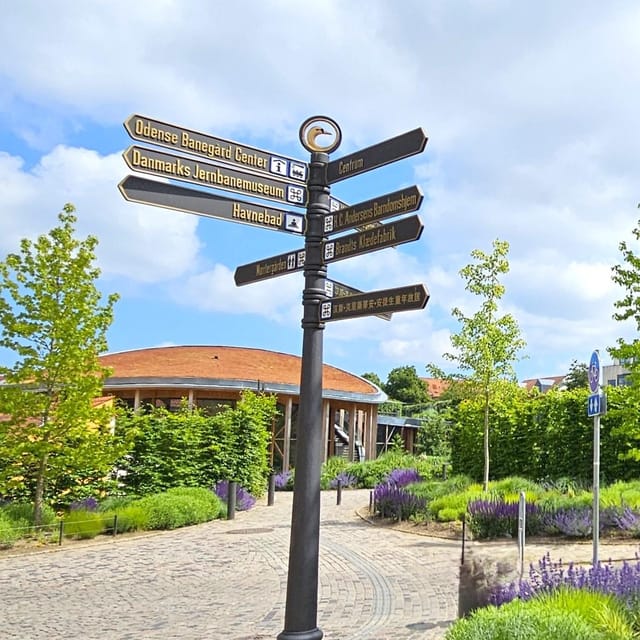
The meeting point is Overgade 3, on the pedestrian street. Look for a small ruin and a sign marked KnowledgeWalks. The location is compact, so finding the guide should not be difficult.
Starting here gives the walk a useful contrast. You begin among the older parts of Odense, then move toward places shaped by recent planning. This is not a route that abandons the historic center. Instead, it uses the old city as the first chapter in a larger story.
You should arrive ready to walk rather than expecting a fixed outdoor lecture. The group may pause often, but the experience covers several parts of town before returning to Overgade 3. Comfortable shoes matter more than dressy sightseeing clothes.
The guide may be Jørn Asmussen, who is named directly in the feedback, or another member of the small guiding team. One participant refers to the guide as Johan. In either case, the experience is built around a local person talking with you, not a recording or a large tour operation.
Albani Torv and the changing center
The first substantial stop is Albani Torv, where the guide spends about 30 minutes. This is a good place to begin thinking about how the center works today and how it once functioned.
The walk’s central theme appears here in practical form: a city center must serve residents, workers, students, cyclists, and visitors at the same time. The guide connects the visible public space to wider issues such as infrastructure and urban planning.
I would pay attention to the guide’s older images at this stage. They help you avoid looking at a new square or open area as if it appeared by accident. Instead, you begin to understand the work involved in changing traffic patterns and making central Odense more suitable for people on foot.
This portion is also where questions are especially valuable. You can ask about how local people responded to change, how the city manages growth, or how new planning affects daily routines. The walk is designed for that kind of exchange.
Donkey Republic and the practical side of moving around
The route then reaches Donkey Republic for another 30-minute guided stop. The name connects the location with bicycle sharing, making it a useful point for discussing transport and access in a city that wants to be greener.
The tour does not treat green planning as a slogan. It looks at how people actually move through the city and what infrastructure is needed to support different choices. Cycling, walking, roads, and public space all compete for room. A city can announce environmental goals, but the details are found in places like this.
If you care about urban design, this may be one of the most useful sections of the walk. You can ask how transport affects the center, how young people get around, and how new districts connect to older ones. The guide also places these questions in a Danish context, rather than presenting Odense as an isolated example.
Do not expect a dedicated bicycle ride. This remains a walking tour. Donkey Republic is a discussion stop within the route, not a rental activity included with your booking.
A few more tours around Denmark worth a look
- Copenhagen: Canal Cruise with Guide
★ 4.6 · 9,115 reviews - Copenhagen: Hop-On Hop-Off Bus Tour with Boat Tour Option
★ 3.9 · 4,122 reviews - Private Walking Grand Tour of Copenhagen
★ 5.0 · 3,953 reviews - From Copenhagen: Lund and Malmö 2-Country Tour
★ 4.7 · 2,772 reviews
The Port of Odense and the modern turn
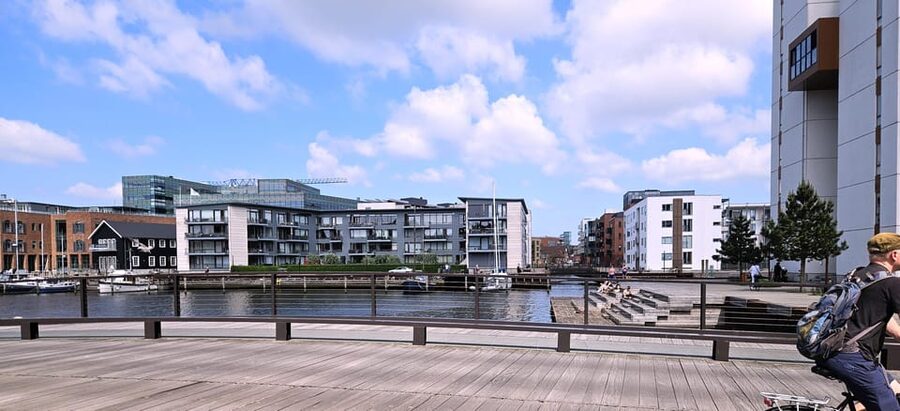
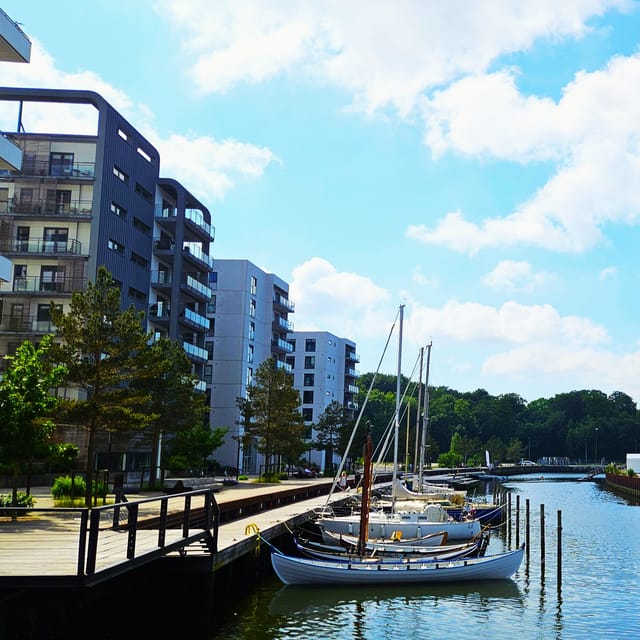
The port is the route’s clearest symbol of Odense’s modern transformation. You spend about 30 minutes here, looking at an area where the city’s industrial past meets its plans for a greener, more creative future.
Port districts often reveal how a city thinks about land and renewal. Industrial sites can bring jobs and transport links, but they may also separate neighborhoods or leave large areas underused. When a city changes these spaces, it must decide what belongs there next: homes, businesses, public areas, cultural uses, or a mixture.
Here, the guide explains how Odense is working toward an innovative city with space for young people and more affordable housing in the center. That focus gives the walk a social side. Urban change is not only about attractive buildings. It is also about who can afford to live nearby and whether the center remains a real place to live.
The harbor section may appeal most to you if you enjoy seeing a city in transition. It is less about polished monuments and more about reading the evidence of change around you. Since development is still underway in parts of the route, you may see both finished areas and plans taking shape.
Storms Pakhus and a former industrial district
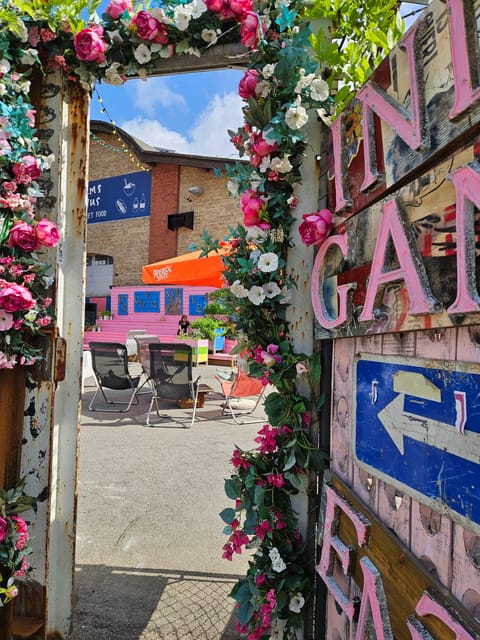
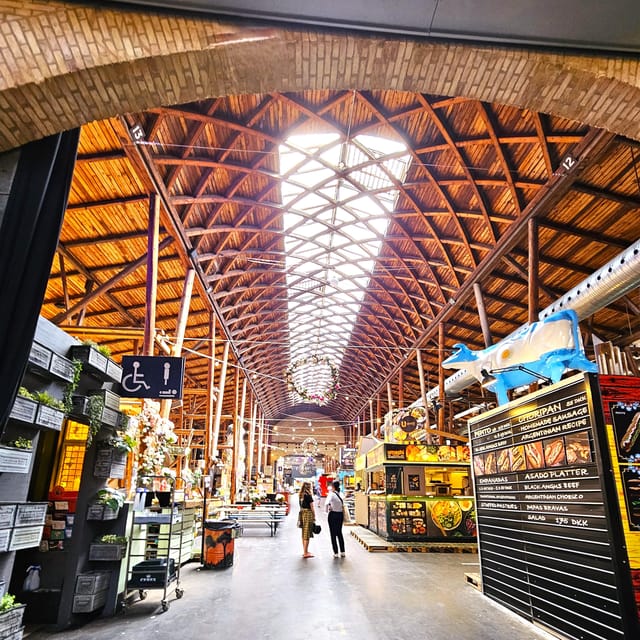
After the port, the route reaches Storms Pakhus, the Odense Street Food venue, for about 15 minutes. The name and setting fit the broader story of old industrial structures gaining new public uses.
A food hall can make redevelopment feel immediate. Instead of discussing a former industrial area only in abstract terms, you see how an old type of building or district can become a place for eating, meeting, and spending time. The stop is brief, so do not expect a full meal break built into the schedule.
The guide also points out a former industrial area where an entirely new district is developing. This is one of the places where the walk moves beyond finished attractions. You are looking at the city’s next chapter, with questions still being worked out.
I like this part because it adds a necessary note of uncertainty. A city is never finished. New housing and public spaces may meet some needs while creating others. The guide’s job is not simply to tell you that redevelopment is good, but to explain what Odense is trying to achieve and why those choices matter.
H.C. Andersen Haven and the return to the old city
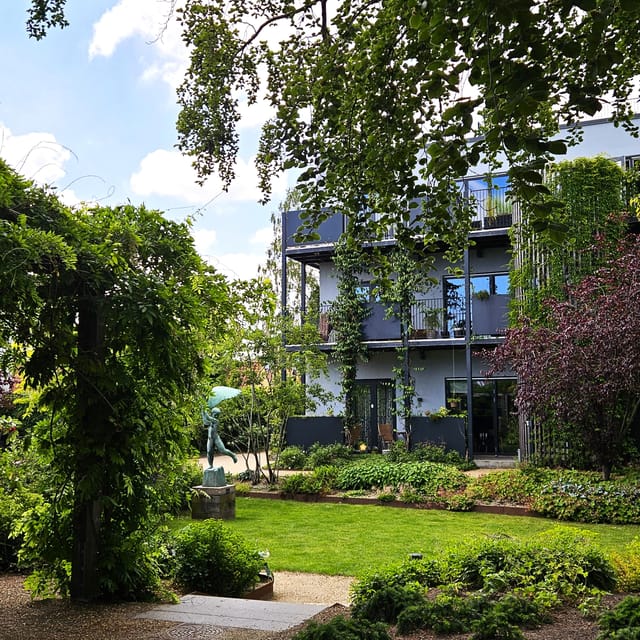
The final listed stop is H.C. Andersen Haven, where the guide spends about 15 minutes. The garden brings the route back toward the familiar cultural identity of Odense, but by this point you will be looking at the city with a wider frame.
The park is a reminder that modern planning does not replace the old city. Odense is trying to connect its historic and cultural places with newer districts, walking routes, harbor areas, and public spaces. The route finishes back at Overgade 3, creating a round trip rather than leaving you on the far side of town.
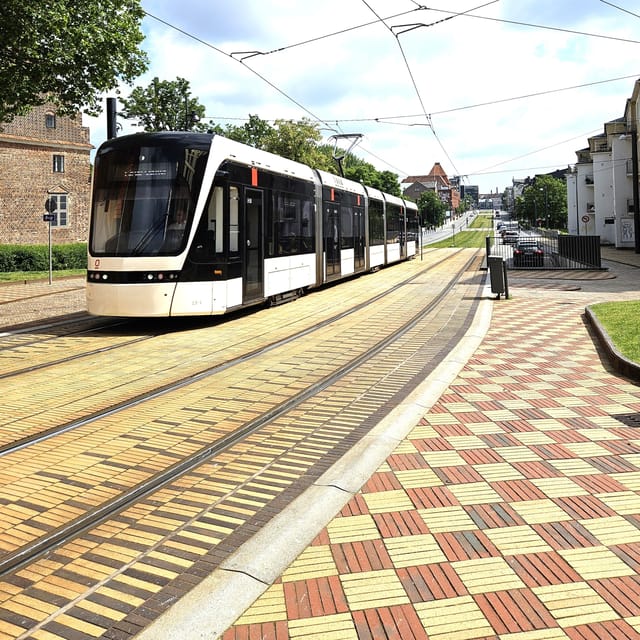
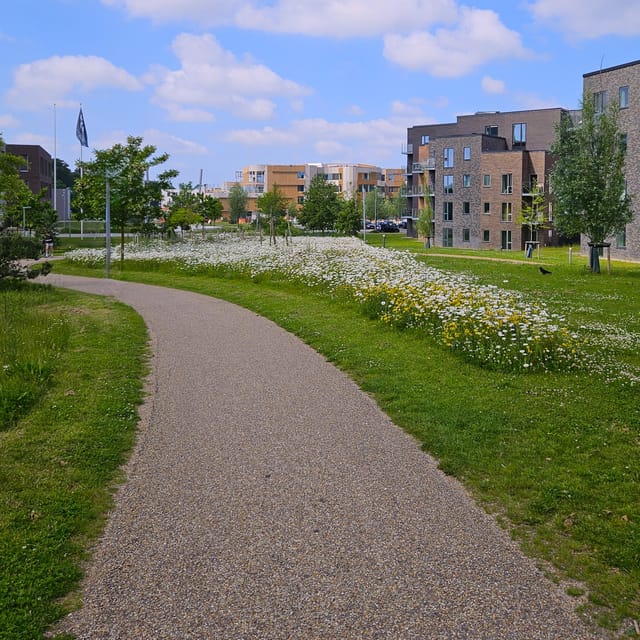
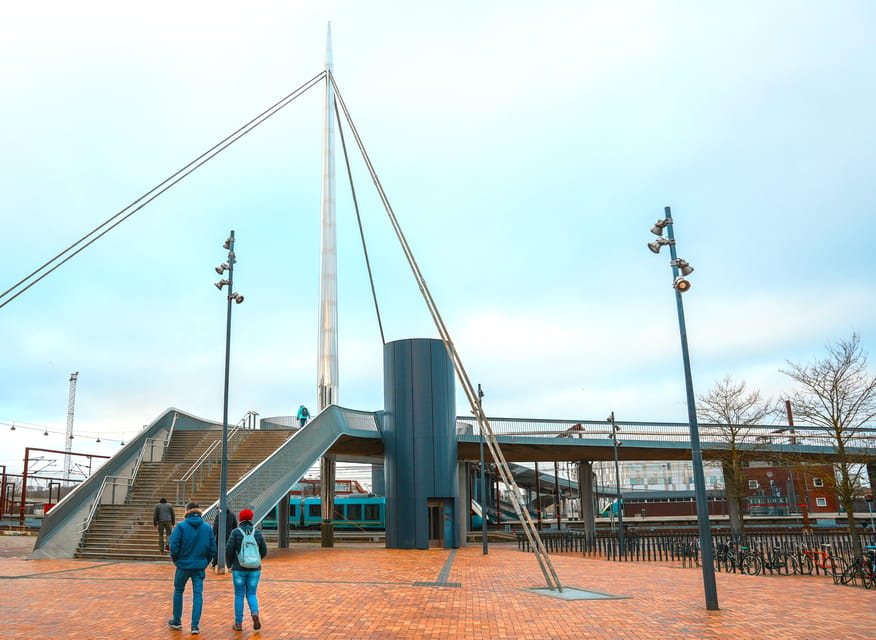
The return route passes through a completed urban area built where a six-lane main road once ran through the center. This is one of the walk’s most striking details. A road that once carried traffic has given way to a different kind of central space, and the guide uses that change to explain the city’s priorities.
You may find this section especially helpful because it makes planning visible at street level. Rather than looking at a map, you stand in the place where the old decision once dominated the city. The comparison between past and present is one of the strongest reasons to take the tour.
What the guide adds to the walk
The guide is the main reason this experience works. The route alone would show you redevelopment, but a local voice gives it meaning. Jørn Asmussen is praised for his friendly manner, strong German, and ability to explain Odense’s positive changes clearly. One German-speaking participant also found time for a short discussion of Greenlandic life, showing that the conversation can move beyond the prepared route when questions lead that way.
English and German are available. If you choose German, the experience may be particularly useful because the guide can discuss complex subjects such as housing and public policy in detail. English-speaking visitors also have access to the same main themes.
The small group matters here. City planning is full of terms and trade-offs, and you may want to stop the guide to ask how a change affects residents. In a large group, that can be awkward. With fewer people, the walk feels more like a guided conversation.
Do keep your expectations realistic. The exact guide can vary, and the experience depends partly on the questions asked by the group. If everyone wants only landmark facts, the discussion may stay broad. If you are curious and engaged, you can get much more from it.
Price, pace, and the real value
At $31 per person, this is priced above a basic orientation walk but below many specialized half-day experiences. You are paying for two hours with a local guide, a small group, and access to context that you would not easily gather from signs or a standard guidebook.
The value is strongest if you care about cities, architecture, transport, housing, or Danish society. You are not paying for entry to an attraction. You are paying for explanation and conversation. The tour can also help you notice changes during the rest of your stay, which gives it value beyond the two-hour route.
The cost may feel less worthwhile if you want only the classic Odense highlights or if you prefer to explore at your own pace. You will see familiar places, but the emphasis is on development rather than on detailed stories about individual historic buildings.
The pace is manageable for anyone comfortable with about 4 km of walking. The stated estimate of 5,500 steps is a useful guide. Since the route is outdoors and includes several districts, wear shoes suited to a steady walk and allow the full two hours.
You can cancel up to 24 hours before the start for a full refund, and you can reserve now while paying later. Check the available start times when booking, since the schedule is not fixed in the information provided.
Who should book this experience?
I would choose this walk early in an Odense visit if I wanted to understand the city before exploring it further. The route gives you a framework for later walks around the center, harbor, and newer districts.
It suits you best if you:
- Prefer local explanation to a list of famous sights
- Want to understand modern Denmark through one city
- Enjoy architecture, transport, housing, or public policy
- Like asking questions during a small-group tour
- Can walk about 4 km at a comfortable city pace
- Have already seen some of Odense and want a second layer of context
It is less suitable if you need a short, low-walking activity, a child-focused attraction tour, or a detailed biography of H.C. Andersen. H.C. Andersen Haven appears on the route, but the main subject is the city, not the author.
Should you book the New Green Odense walk?
Book it if you want to know why Odense looks the way it does today. The strongest parts are the harbor, the former industrial areas, the road transformed into a people-focused urban district, and the guide’s use of older photographs to show the difference.
The tour offers real value for curious visitors, especially those who like to connect local life with planning decisions. It is friendly, serious, and more personal than a large sightseeing circuit. Just understand the subject before booking: this is a city-development walk with cultural stops, not a standard monument tour.
If that sounds like your kind of afternoon, $31 is a fair price for two hours of local conversation and a more informed view of Odense.
FAQ
Where does the walking tour start?
It starts at Overgade 3, 5000 Odense, on the pedestrian street. Look for a small ruin and a guide carrying a KnowledgeWalks sign.
How long is the tour?
The tour lasts two hours and returns to Overgade 3 at the end.
How far do you walk?
The route covers about 4 km, or approximately 5,500 steps.
What languages are available?
The live guide speaks English or German.
What places does the route include?
The walk includes Albani Torv, Donkey Republic, the Port of Odense, Storms Pakhus, H.C. Andersen Haven, and a completed urban area built where a six-lane main road once ran through the center.
Can I cancel the booking?
Yes. You can cancel up to 24 hours in advance for a full refund. You can also reserve now and pay later.
Just added in Denmark
- Understanding Klaksvík: A Self-guided city tour in KlaksvÍk★ 5.0 · 3 reviews
- Súðuroy Island Day Tour, Faroe Islands★ 4.5 · 3 reviews
- Wonders of Vágar Island | Private Experience★ 5.0 · 4 reviews
- E Biking Adventure to Kronborg Castle★ 5.0 · 3 reviews
- Fishing Experience in Faroe Islands★ 4.5 · 7 reviews
- Faroe Islands: Highlights Tour★ 5.0 · 6 reviews
- Copenhagen Walking Tour with Food Testing (smorrebrod dish & snap)★ 4.5 · 10 reviews
- a day at North Zealand Castle Tour★ 4.5 · 19 reviews
Copenhagen Walking Tours, compared.
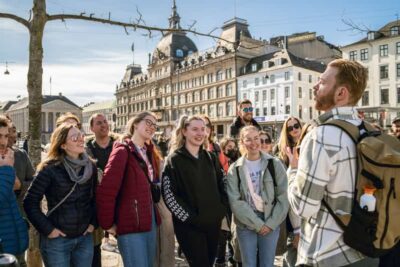
Group Walking Tour – City Highlights – 2 Hours
Read our review →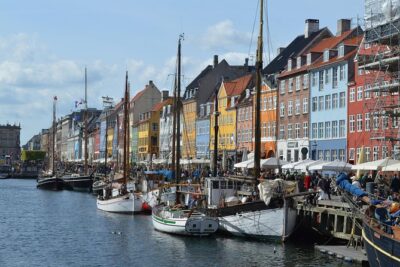
3h walking tour, small group max 10 people Copenhagen
Read our review →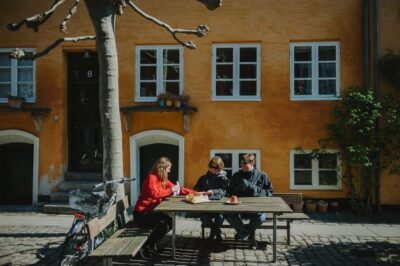
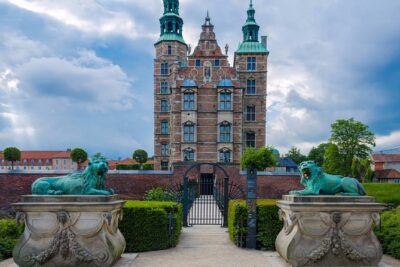
Copenhagen Walking Tour: Highlights and Hygge w/Lunch
Read our review →
Browse the lists this tour appears in