
Reviewed · COPENHAGEN TOURS
Life on Copenhagen’s Streets: Philip’s crazy life
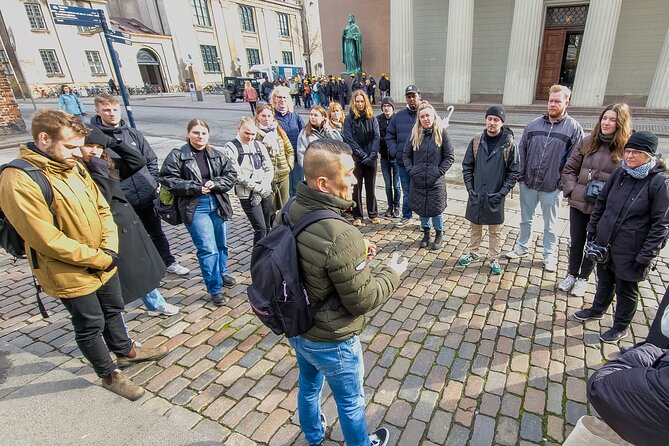
Philip’s walk is not a standard sightseeing tour. You come to hear one man explain how drug abuse, homelessness, and crime shaped his life, while walking through central Copenhagen from Nørreport Station to City Hall Square. The city provides the setting, but Philip’s story is the main event.
I like two things right away: the route uses places you might otherwise pass without much thought, and Philip speaks with unusual honesty about choices he regrets, asking for help, and finding a way forward. The drawback is clear too: this is serious, emotional material, not a light afternoon stroll.
I also like the compact format. The advertised walk takes about 90 minutes, follows a central route, and ends beside the metro at Rådhuspladsen. Just keep in mind that Philip has sometimes continued for closer to two hours when the group wanted more time for questions.
Key points to know before you go
- Philip’s personal story drives the walk: Expect frank discussion of addiction, homelessness, crime, difficult choices, and hope.
- The route crosses central Copenhagen: You walk from Nørreport Station through the cathedral area, Gammeltorv, Studiestræde, and Rådhuspladsen.
- This is not an interior sightseeing tour: You see the Church of Our Lady from outside, but do not enter.
- The group is capped at 20 people: That keeps the format fairly personal and gives you a chance to ask questions.
- The walk is in English: It starts at 1:30 p.m. and lasts about 1 hour 30 minutes.
- The finish is convenient: You end next to the Rådhuspladsen metro station, useful for continuing your day.
A Copenhagen walk with a very personal center
Many city walks explain buildings, kings, wars, and dates. This one explains something harder to see: how a person can move from an ordinary childhood into a life marked by addiction, homelessness, and crime.
Philip tells that story while walking through Indre By, Copenhagen’s central district. The streets are not treated as a museum display. Instead, they become a backdrop for his memories and reflections. That gives the walk a different weight from a regular orientation tour.
I value the fact that Philip does not present only the polished parts of his past. The story includes decisions and behavior he is not proud of. That frankness matters, because it avoids turning hardship into a simple tale with an easy villain and a tidy ending.
At the same time, the walk is not meant to leave you without hope. Philip also stresses the importance of reaching out for help and shows that a person can begin to move forward after reaching a very low point. You should expect thoughtful conversation, not shock value for its own sake.
The experience works especially well for people who want to understand a city through the lives of its residents. It has also suited school groups and exchange-program groups, though parents and teachers should decide in advance if the subject matter is right for their students.
A few more tours around Copenhagen worth a look
- Copenhagen: Canal Cruise with Guide
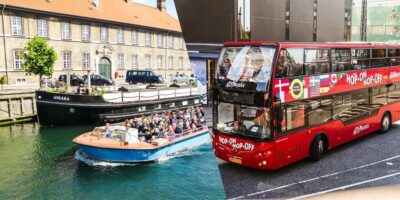
★ 4.6 · 9,115 reviews - Copenhagen: Hop-On Hop-Off Bus Tour with Boat Tour Option
★ 3.9 · 4,122 reviews - Private Walking Grand Tour of Copenhagen
★ 5.0 · 3,953 reviews
Starting at Nørreport, Denmark’s busiest station
The meeting point is at Nørreport Station, at Nørre Voldgade 82. The station handles about 250,000 people each day, so it is a practical place to meet, but you should allow a little time to find the exact starting spot in this busy transport area.
Nørreport is useful as a first stop because it immediately places the walk in ordinary Copenhagen life. Trains, metro services, bicycles, commuters, and visitors all pass through here. Philip’s story begins against that everyday setting rather than in a formal tour office.
The meeting time is 1:30 p.m. The tour is offered in English, and the maximum group size is 20. That is large enough to give the walk some social energy, but small enough that questions should remain manageable.
The station is close to the rest of the route, so you do not spend much of the 90 minutes covering long distances. You will be walking and stopping repeatedly, rather than marching from one major attraction to another. Wear comfortable shoes, even though the route is urban and relatively compact.
The Church of Our Lady, seen from the street
The next stop is the Church of Our Lady, or Vor Frue Kirke, Copenhagen’s Lutheran cathedral. You stop for about 15 minutes, but the church interior is not included.
That limitation is worth knowing before you book. If you want a tour focused on architecture, religious art, or a look inside the cathedral, this will not fill that need. The church functions here as one point along Philip’s route, not as a full attraction visit.
The value comes from the contrast between the building’s public role and the private life Philip describes. A cathedral may suggest stability, tradition, and shelter. Philip’s account looks at the less secure side of city life. The setting gives the group a place to pause and consider how different lives can exist within a few streets of one another.
This is also a good place to ask questions if you need clarification. Philip is described as reflective and open to questions, and the format allows discussion rather than a nonstop speech. Still, remember that the subject is personal. Ask with care and give him room to decide how much detail to share.
Gammeltorv and the oldest square in Copenhagen
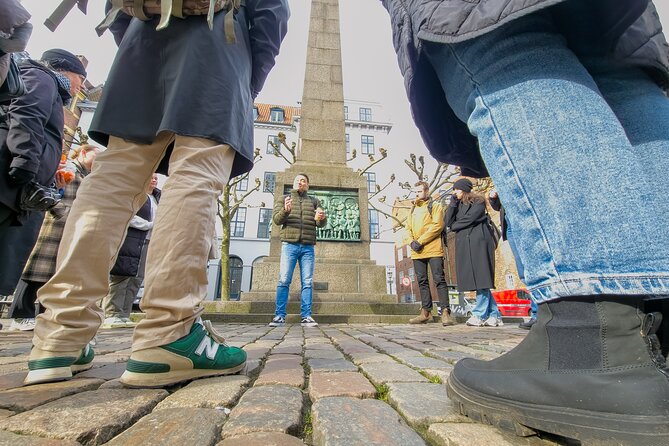
The walk continues to Gammeltorv, known as the Old Square and described as Copenhagen’s oldest square. You spend about 15 minutes here.
Gammeltorv gives the route a strong sense of place. You are not just hearing Philip’s story in an anonymous meeting room. You are standing in one of the city’s central public spaces, where old Copenhagen and present-day city life meet.
For a first-time visitor, this stop also helps with orientation. The square connects naturally with the central streets, shops, and other major sights. You can take in the setting while listening, rather than having to concentrate on a long transfer.
The possible drawback is that the city itself can compete for your attention. Central Copenhagen is active, and you may hear street noise or find other people moving through the square. That is part of the setting, but it means the quality of the experience depends partly on how well you can listen outdoors.
Same city, a different sort of afternoon:
- From Copenhagen: Lund and Malmö 2-Country Tour
★ 4.7 · 2,772 reviews - Copenhagen Highlights Walking Tour
★ 5.0 · 2,324 reviews - Copenhagen: Highlights 3 Hour Bike Tour with a Local Guide
★ 4.8 · 2,312 reviews - Hamlet and Sweden Tour – Two Countries in one day !
★ 5.0 · 2,223 reviews
Studiestræde and the ordinary side of central Copenhagen
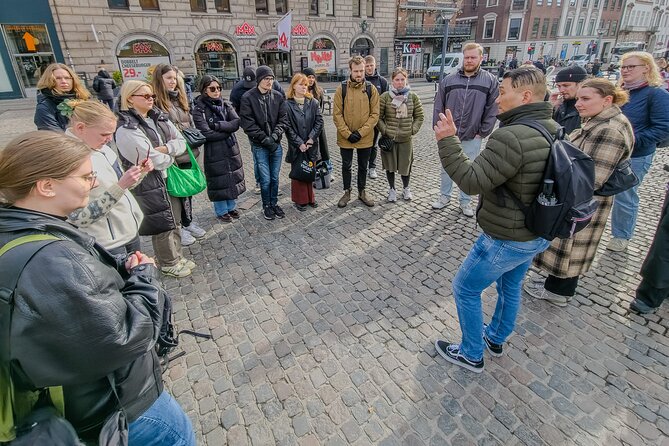
Studiestræde is the most everyday stop on the route. This central street has shops, cafés, bars, clubs, and restaurants. The scheduled stop lasts about 15 minutes.
I like this part of the walk because it shifts the focus away from famous buildings. You see a working street where people eat, shop, meet friends, and go out. Philip’s story gains force in a place that feels lived in rather than staged for sightseeing.
Studiestræde also helps explain why this is a city walk rather than a seated talk. You keep moving through the kinds of streets where private struggles are easy to overlook. The setting does not turn Philip’s life into a lesson from a distance. It keeps the conversation connected to the city around you.
This stop may be less satisfying if you are looking for a long list of monuments or photo opportunities. The route includes well-known places, but it is not designed to give detailed architectural commentary on every building. Your attention will be on Philip and the questions his story raises.
Rådhuspladsen, where the walk ends
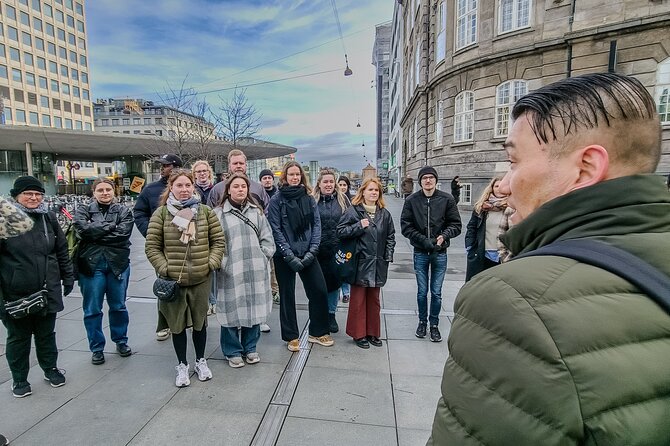
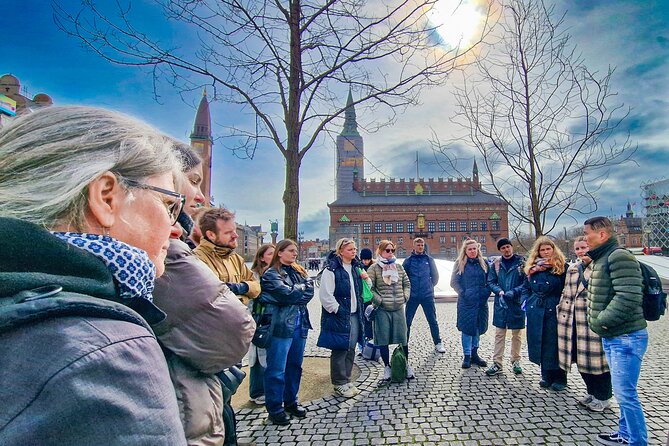
The final stop is Rådhuspladsen, or City Hall Square. Copenhagen City Hall dominates the square, with its early 20th-century building providing a recognizable finish.
The tour ends near the Rådhuspladsen metro station, which is one of the most useful features of the route. You can continue into the city, return to your accommodation, or connect with another part of Copenhagen without arranging a separate pickup.
Ending at a major public square also gives the walk a natural pause. After hearing about a life shaped by harmful choices and difficult circumstances, you finish in a broad, central space rather than at a quiet dead end. Philip’s story does not pretend that every problem is solved, but the location supports the message that another step is possible.
If you have plans immediately afterward, allow flexibility. The official duration is about 1 hour 30 minutes, but the walk has sometimes lasted around two hours when conversation continued. That is a positive sign if you want discussion, but it is important if you have a timed reservation afterward.
What Philip’s storytelling style means for you
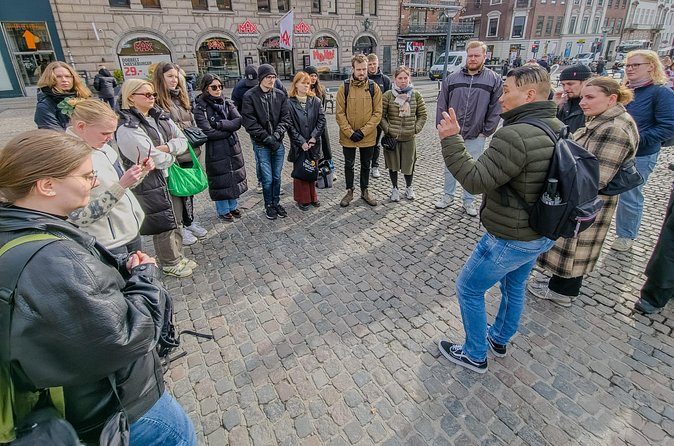
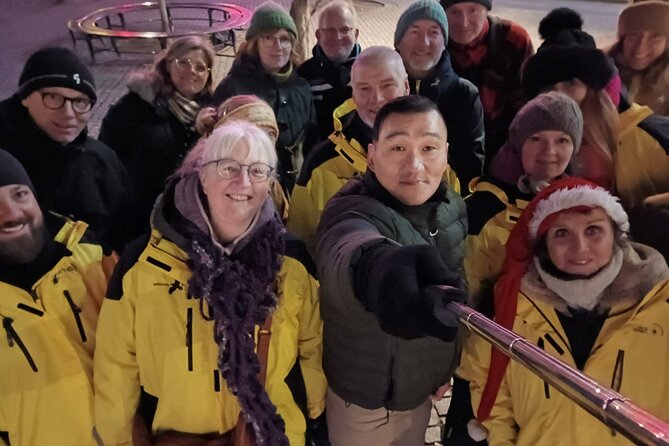
The strongest part of this experience is Philip’s willingness to speak plainly. He shares both the painful events and the parts of his behavior he finds hardest to discuss. That creates a serious, reflective mood rather than a polished performance.
I would not book this walk expecting a standard guide who delivers a memorized list of dates. Philip is better understood as a personal storyteller and discussion leader. His role is to connect his own life to wider questions about addiction, crime, homelessness, responsibility, and the possibility of recovery.
The conversation can be especially meaningful for young people. Several comments describe the walk as useful for students because it shows how one decision can affect the course of a life. Philip also makes clear that asking for help matters, which keeps the message from becoming purely bleak.
The experience requires some emotional readiness. If you are looking for a cheerful introduction to Copenhagen, choose a conventional sightseeing tour instead. If you are willing to listen to difficult material and think about it honestly, this walk offers something much less typical.
The supplied information includes references to guides named Christian and Bertram in a few comments, but the tour details identify Philip as the guide for Life on Copenhagen’s Streets. Because of that mismatch, I would confirm the guide’s name when booking if it matters to you. The title and route clearly center on Philip.
Is the $30.62 price fair?
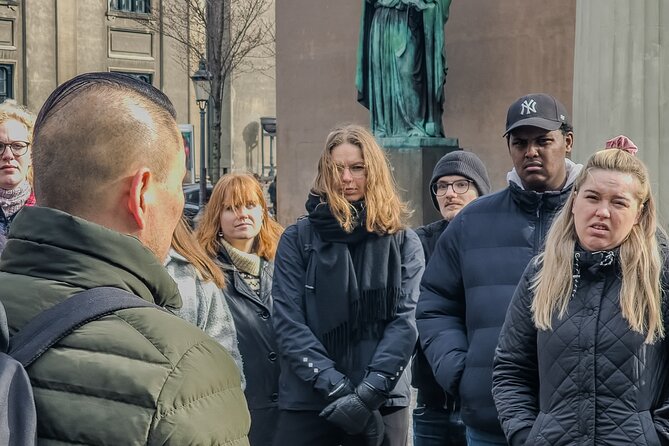
At $30.62 per person, this costs more than a simple self-guided walk through central Copenhagen, but that is not the right comparison. You are paying for a personal account, guided discussion, and a structured route through several important parts of the city.
The admission cost at most stops is free, and there are no included museum entries or paid attractions. That means the value comes almost entirely from Philip’s time, preparation, and openness. If you judge a tour by the number of buildings you enter, the price may feel high.
I think the price makes more sense if you want a human story that changes how you view familiar streets. The group limit of 20 helps, and the walk can run longer when questions continue. For school groups, exchange programs, or people interested in social issues, the cost may be easier to justify than for someone seeking basic city orientation.
You should also compare it with what you want from your limited time in Copenhagen. A first-time visitor may prefer a broad introduction to major sights. Someone who already knows the center, or who wants a more personal and challenging afternoon, may find this a better use of 90 minutes.
Practical details that affect the experience
The walk starts at 1:30 p.m. at Nørre Voldgade 82, near Nørreport Station, and ends at Rådhuspladsen 1599 near the metro. It is offered in English and uses a mobile ticket.
The route is close to public transportation, and service animals are allowed. Most people can take part, but you should be comfortable walking and standing through several outdoor stops. No special entry ticket is needed for the squares or streets, and the cathedral interior is not visited.
The maximum group size is 20. That is worth noting because the subject depends on hearing Philip clearly and having a chance to ask questions. A smaller group might feel more intimate, but the stated limit is still reasonable for a walking discussion.
Free cancellation is available up to 24 hours before the start time for a full refund. Changes or cancellations made less than 24 hours before the start time are not accepted for a refund. The experience also requires a minimum number of participants, so if it is canceled for that reason, you are offered another date or experience, or a full refund.
Who should book Philip’s walk?
I would recommend it to:
- People who prefer personal stories over a standard monument tour
- Visitors interested in addiction, homelessness, crime, recovery, and social questions
- Teachers or group leaders looking for a serious discussion starter
- Repeat visitors who have already seen Copenhagen’s main sights
- Anyone comfortable with an emotional and sometimes uncomfortable subject
I would think twice if you want a light, family-style introduction to the city, a detailed cathedral visit, or a tour packed with interiors and historical facts. Children and younger teenagers may need extra consideration because of the themes.
The best way to approach the walk is to listen without treating Philip’s life as entertainment. Ask thoughtful questions, stay open to complexity, and expect the city around you to continue as normal while the conversation turns serious.
Should you book it?
Book this tour if you want to understand Copenhagen through one person’s difficult life rather than through a checklist of sights. Philip’s honesty, reflective style, and willingness to answer questions are the main reasons to choose it.
Skip it if you want a conventional sightseeing walk or if you would rather avoid discussion of addiction, homelessness, crime, and personal hardship. For the right audience, the $30.62 fee buys a rare kind of city experience: a short walk that may stay with you longer than the buildings you pass.
FAQ
Where does the tour start?
It starts at Nørre Voldgade 82, 1358 København, Denmark, at Nørreport Station.
What time does the tour begin?
The stated start time is 1:30 p.m.
Where does the tour finish?
It ends at Rådhuspladsen, beside the metro station at Town Hall Square.
How long does the tour last?
The scheduled duration is approximately 1 hour 30 minutes. It may run longer when the group continues talking and asking questions.
Is the tour offered in English?
Yes. The tour is offered in English.
Does the tour enter the Church of Our Lady?
No. The church is a stop on the route, but the interior is not visited.
How many people can join the tour?
The maximum group size is 20 people.
Can I cancel for a refund?
Yes. You can cancel up to 24 hours before the experience starts for a full refund. Cancellations or changes made less than 24 hours before the start time are not accepted for a refund.
Just added in Copenhagen
- Copenhagen Walking Tour with Food Testing (smorrebrod dish & snap)★ 4.5 · 10 reviews
- a day at North Zealand Castle Tour★ 4.5 · 19 reviews
- walking tour – Copenhagen and Christiansborg 3 hours★ 4.0 · 7 reviews
- The Six Forgotten Giants Trolls Hunt with Minibus★ 4.5 · 27 reviews
- The Forgotten Giants Private Tour★ 5.0 · 3 reviews
- Small Group Guided Food Tour and Street Art Visit to Norrebro★ 5.0 · 9 reviews
- The Philosopher’s Last Walk: An audio tour on the life of Søren Kierkegaard★ 4.5 · 5 reviews
- Segway Winter Tour 90 Minutes★ 5.0 · 14 reviews
Copenhagen Tours, compared.
Hop-On Hop-Off Bus Tour with Boat Tour Option
Read our review →
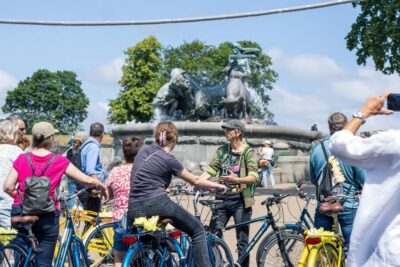
Highlights 3 Hour Bike Tour with a Local Guide
Read our review →
Hamlet and Sweden Tour – Two Countries in one day !
Read our review →
Browse the lists this tour appears in