
Reviewed · COPENHAGEN WALKING TOURS
Copenhagen: Harbor Architecture Private Walking Tour
Copenhagen’s harbor is a living architecture lesson, where painted 17th-century townhouses, sleek cultural buildings, old industrial sites, and clever pedestrian bridges share the same waterfront. This private two-hour walk connects those pieces and helps explain why Copenhagen was named World Capital of Architecture in 2023.
I like the route’s mix of old and new, especially the contrast between Nyhavn and modern harbor projects. I also like the private format, which gives you a better chance to ask questions about design, city planning, and the buildings you pass. The main drawback is pace: two hours covers several stops, so this is an introduction rather than a detailed architectural study.
Key points at a glance
- Nyhavn to modern harbor design: See Copenhagen’s famous colorful canal district before moving into newer waterfront developments.
- A private group for up to two people: The $394 price works out to $197 per person when two people share it.
- A strong mix of landmarks: The route includes Ofelia Plads, Krøyers Plads, Cirkelbroen, the Royal Library, and the Danish Architecture Centre.
- English or Spanish guiding: You can choose between the two listed tour languages.
- Outdoor sightseeing in all weather: Bring water and comfortable clothing, since the walk runs rain or shine.
- A route for mobile walkers: The experience is not suitable for wheelchair users or people with mobility impairments.
Why Copenhagen’s harbor makes a good architecture tour
Copenhagen’s waterfront gives you more than isolated buildings to photograph. It shows how a working port can change over time without wiping away every trace of its past.
You begin near Nyhavn, an area shaped by ships, trade, sailors, artists, and writers. From there, the route moves toward newer projects that use old harbor land for public spaces, cultural buildings, food venues, and pedestrian connections. That sequence helps you see Copenhagen as a city in conversation with its waterfront.
The tour also gives you a useful answer to a common question: what makes Copenhagen’s architecture notable? The answer is not simply that the city has attractive buildings. It is the way architecture, public access, bicycles, water, culture, and everyday city life work together.
This matters because harbor architecture can feel abstract when you view it from a distance. A guide can point out how a building relates to its surroundings, why an old industrial site was preserved, or how a bridge changes the way people move through the city.
More time on the water in Copenhagen
- Copenhagen: Canal Cruise with Guide
★ 4.6 · 9,115 reviews - Copenhagen: Hop-On Hop-Off Bus Tour with Boat Tour Option
★ 3.9 · 4,122 reviews - Copenhagen Sightseeing Classic Canal Tour With Live Guide
★ 4.5 · 1,906 reviews
Starting at Ofelia Plads beside Nyhavn
The meeting point is in front of the Scandic Hotel at Ofelia Plads, close to Nyhavn. The listed starting address is Sankt Annæ Plads 21, so I would confirm the exact spot with the provider before setting out, especially if you are arriving by taxi or navigating from another part of the city.
Ofelia Plads is a fitting place to begin. It puts you beside the water and near Nyhavn, while also introducing the more open, modern side of Copenhagen’s harbor. You begin with space, views, and contemporary public design before entering the tighter streets and canal frontage of Nyhavn.
The walk here is guided for about 15 minutes. That is enough time for an overview and orientation, but not enough for a long architectural lecture. You will get the most from it if you arrive with a few questions ready, such as how the harbor has changed or how Copenhagen balances historic buildings with new construction.
Nyhavn: colorful houses with a working-port past
Nyhavn is one of Copenhagen’s most recognizable sights, and it is easy to reduce it to a row of colorful façades and outdoor restaurants. The guide adds useful context by explaining that this was once a busy port district, not simply a pretty waterfront for photographs.
You will hear about the area’s connection to sailors, trade, artists, and writers. That background helps you read the buildings more clearly. The narrow canal, old houses, and water-level frontage all make more sense when you picture Nyhavn as part of a working harbor.
The scheduled stop is about 15 minutes. That is short, so expect a focused introduction rather than a full historical tour of every house. Still, the setting is one of the best places on the route for photos, particularly if you want the classic Copenhagen waterfront view.
Nyhavn also gives the tour a useful starting contrast. The architecture here is familiar, colorful, and tightly packed. Later, the route opens into larger spaces and more recent buildings, making the city’s development easier to follow.
Krøyers Plads and the changing eastern harbor
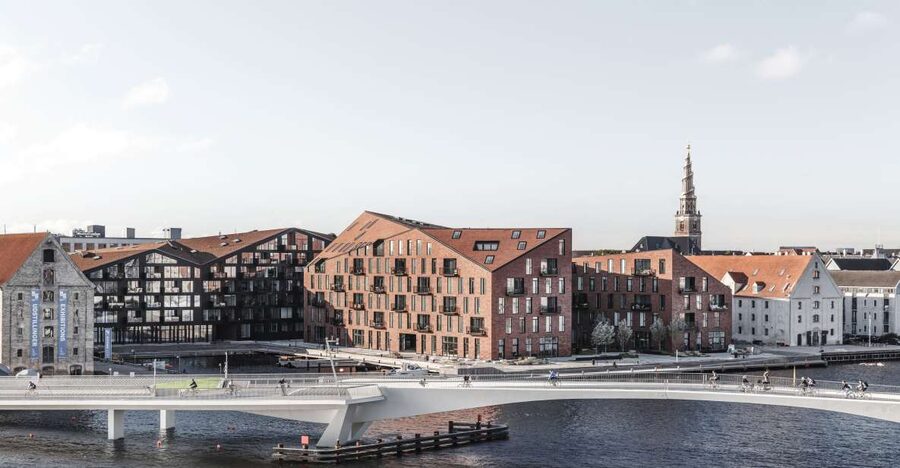
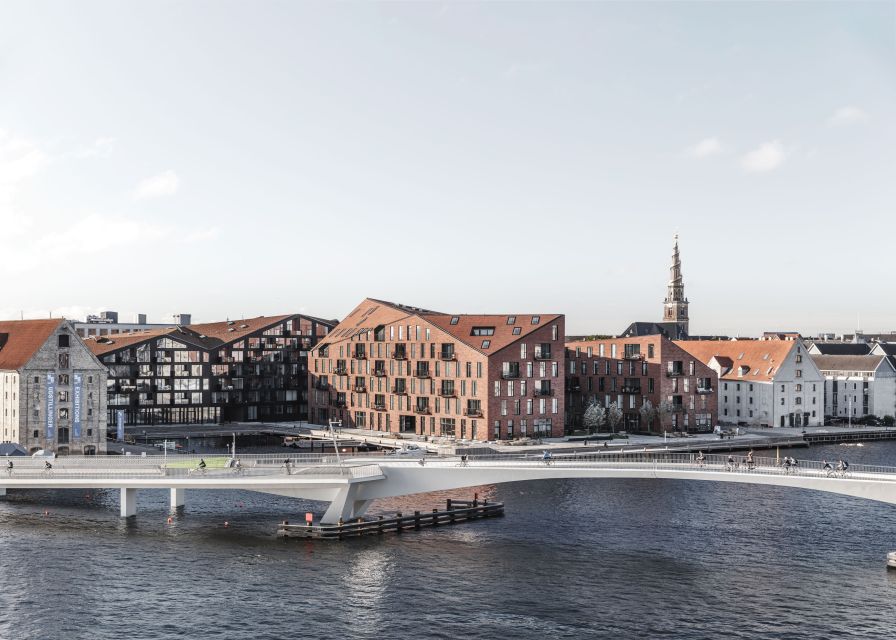
From Nyhavn, the walk continues to Krøyers Plads, another waterfront area where older harbor character meets newer development. The stop is planned for about 15 minutes.
This is where the tour’s focus shifts from famous historic scenery to the question of how Copenhagen builds beside the water today. You will hear about the area and its architecture, with the guide connecting the harbor’s past to the city’s modern needs.
The value of this stop is comparison. Instead of viewing new construction on its own, you can consider it alongside Nyhavn’s older buildings. That makes it easier to notice differences in scale, materials, open space, and the way people use the water’s edge.
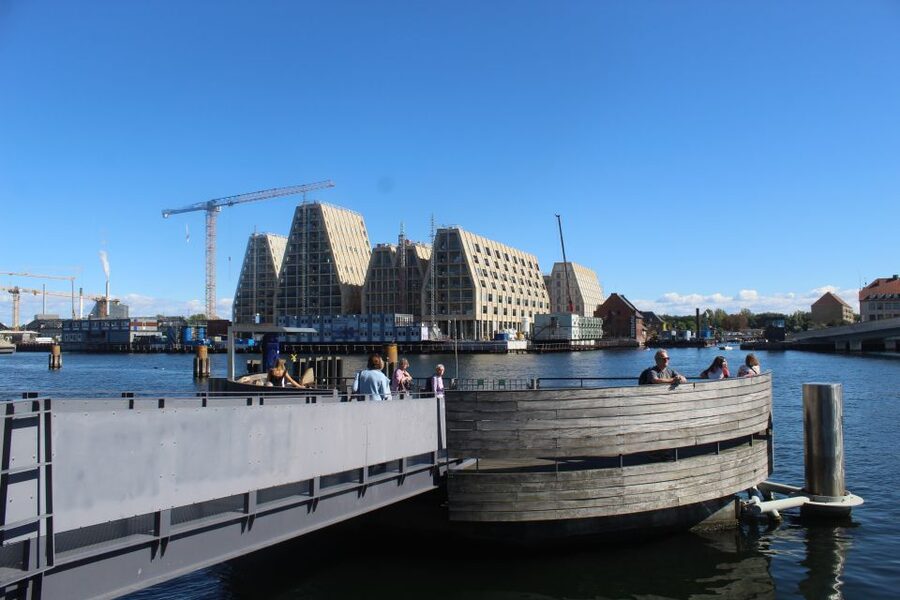
The route also includes Papiroen, a former paper mill site that has been turned into a modern public area. Its industrial past is part of the point. The project shows how an old working site can be reused rather than simply erased and replaced.
Papiroen is also associated with market activity and harbor views. You should expect a look at the site’s architecture and its redevelopment, not a meal or food tasting. Food and drinks are not included, so plan your own refreshments if you want something along the way.
More guided walks in Copenhagen
- Copenhagen Highlights Walking Tour
★ 5.0 · 2,324 reviews - Politically Incorrect Private Highlights Walking Tour
★ 5.0 · 1,244 reviews - Copenhagen: Group Walking Tour – City Highlights – 2 Hours
★ 4.7 · 1,088 reviews - 3h walking tour, small group max 10 people Copenhagen
★ 5.0 · 686 reviews
Operaen and the harbor as a cultural stage
The Copenhagen Opera House, known locally as Operaen, is another major sight on the route. Completed in 2005, it quickly became an important part of the city’s cultural identity.
The guide explains the building’s design and its connection to the harbor and Danish cultural traditions. This is a useful stop for anyone who wants more than a quick exterior photograph, since large modern buildings can be difficult to understand without some background.
The Opera House also shows how the waterfront is used for more than shipping and storage. It has become a setting for music, public movement, views, and civic life. You may find the contrast with Nyhavn especially striking: one area grew from port activity, while the other represents a newer cultural role for the harbor.
Since the tour remains outdoors, you should not expect an interior visit or an opera performance. The experience is about the building’s place in Copenhagen and what its design says about the city.
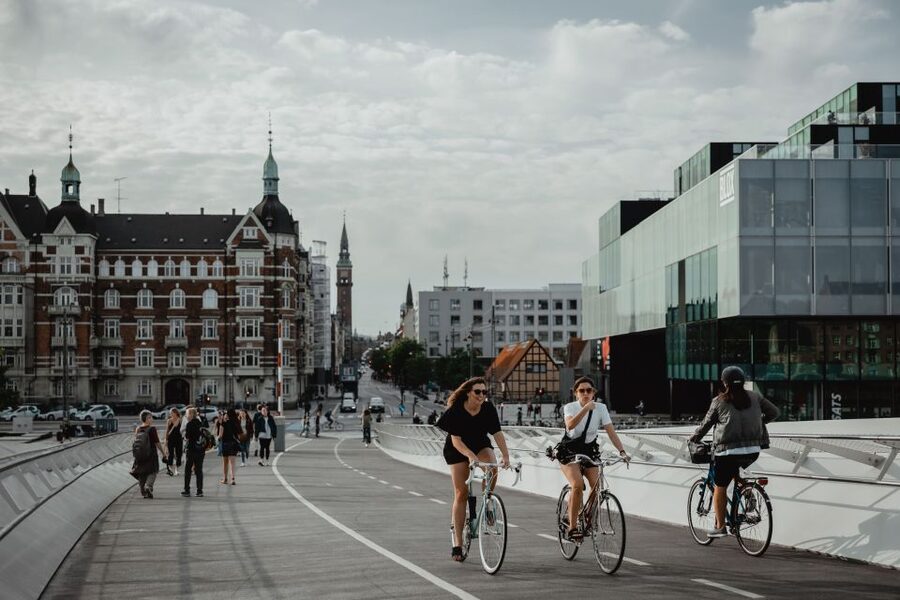
Cirkelbroen, a bridge designed for people
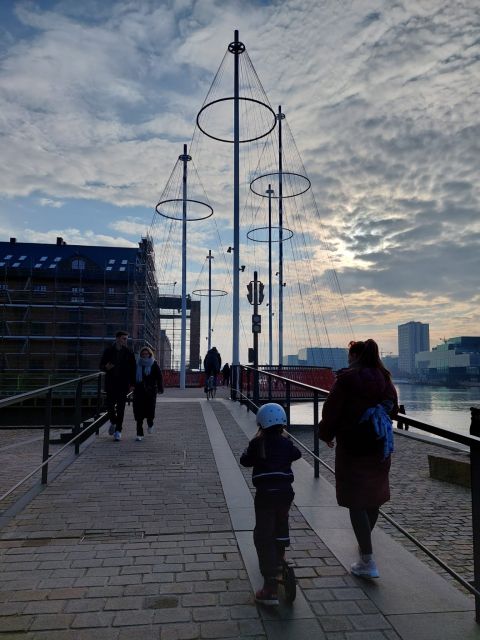
Cirkelbroen is one of the most memorable stops because it is both a useful crossing and an architectural idea. The pedestrian bridge uses a circle-based design inspired by the circles of life.
The route allows about 15 minutes here. That gives you time to look closely at the bridge, cross it, and consider how the structure changes the experience of the harbor. A bridge can be purely practical, but Cirkelbroen turns a short crossing into a small piece of public architecture.
This is also a good example of why a walking tour works better than a vehicle tour for this subject. You can notice how people move across the bridge and how the structure frames the water. You are not just looking at a building from a distance. You are using the space it creates.
Bring comfortable clothes and water. The route includes several outdoor sections, and the tour operates rain or shine. An umbrella or rain jacket would be sensible in Copenhagen, though the official information specifically lists water and comfortable clothing as essentials.
The Royal Library and Danish Architecture Centre
The Royal Library of Denmark is included as a 15-minute photo stop. It gives you another important architectural contrast, particularly when viewed after the more open waterfront sites.
The stop is designed mainly for photographs rather than a full guided visit. That distinction matters. You will have time to appreciate the building from outside, but this is not a library tour and does not include an interior visit.
The Danish Architecture Centre, or DAC, is the final guided highlight before the walk finishes at Islands Brygge 4. DAC is a natural endpoint for an architecture-focused route because it connects the individual places you have seen with broader ideas about Danish design and urban development.
The itinerary gives DAC about 15 minutes. Like the other stops, that makes it a concise introduction. If architecture is your main reason for visiting Copenhagen, you may want to return independently for more time, but the guided stop helps tie the harbor route together.
The stated finish is at Islands Brygge 4, 2300 København. That means you should not plan on returning to the starting point with the guide. Think of the finish as useful if you want to continue exploring the harbor on your own, but allow time to arrange your next activity from there.
What the private format is worth
The price is $394 for a private group of up to two people. For two people, that is $197 each. For one person, the full group price applies, so the value depends heavily on your interest in architecture and your preference for private guiding.
A private tour makes the most sense if you want to ask specific questions, move at a comfortable pace, or shape the conversation around design and city planning. It is also a good fit for a couple or two friends who would rather not join a larger group.
The price is harder to justify if you only want a general introduction to Copenhagen’s sights. Many of the places are public and can be visited without a guide. You are paying for the interpretation, route planning, and personal attention, not for admission tickets or transport.
No food, drinks, hotel pickup, or hotel drop-off are included. The tour is entirely a walking experience, so factor in your own transport to Ofelia Plads and away from Islands Brygge.
The available feedback is strongly positive, with a 4.8 rating from four reviews. The praise focuses on the guide’s enthusiasm and strong command of the subject. One specific guide mentioned is Dalit, whose energy was credited with making Copenhagen feel even more engaging. Another visitor described the harbor route as a particularly good way to learn about the city.
That is encouraging, but the sample is small. I would treat the comments as a sign that the guiding can be a major strength, while remembering that a short tour cannot cover every architectural detail.
Who should book this walk
I would recommend this tour to you if you enjoy buildings, public spaces, city planning, or the way old neighborhoods adapt to new uses. It also suits anyone who wants a clear introduction to Copenhagen’s harbor before exploring more on their own.
The tour works well for a first or second day in the city because it connects several separate areas. You will finish with a better sense of how Nyhavn, the harbor, cultural buildings, and newer developments fit together.
It may be less suitable if you dislike walking, need step-free access, or want to spend a long time inside museums and landmarks. The experience is not suitable for wheelchair users or people with mobility impairments, and there is no stated indoor alternative if the weather turns unpleasant.
Families with older children may enjoy the bridge, boats, colorful houses, and large modern buildings, but the architectural discussion may be most rewarding for adults and older students. Anyone seeking a detailed professional architecture study should also note the two-hour limit.
Practical details before you go
The tour lasts two hours and is offered as a private group experience. Live guiding is available in English or Spanish.
You should wear comfortable clothes and bring water. Since the walk runs in all weather, check the forecast and dress for the day. Copenhagen’s harbor can feel exposed, so a rain jacket may be useful even when the city center looks dry.
Cancellation is free up to 24 hours before the activity for a full refund. You can also reserve now and pay later, which is useful if your schedule is still changing.
Confirm the meeting point before departure because the information gives both Sankt Annæ Plads 21 and the Scandic Hotel at Ofelia Plads. The hotel frontage is the clearest meeting description, but a quick confirmation removes needless confusion.
Should you book the Copenhagen harbor architecture tour?
Book it if you want a private, guided look at how Copenhagen’s harbor has changed from port district to cultural and public waterfront. The combination of Nyhavn, Papiroen, Operaen, Cirkelbroen, the Royal Library, and DAC gives you a good range of architectural periods and uses in only two hours.
Skip it if you mainly want entrance tickets, food, or a relaxed sightseeing ride. This is an outdoor walking lesson, not a museum visit or a general city tour.
For two people who care about architecture, the $394 price can be fair because the guide’s attention is reserved for your small group. The best reason to book is not simply to see the buildings, but to understand how they relate to Copenhagen’s port past and its modern public life.
FAQ
How long does the Copenhagen harbor architecture tour last?
The tour lasts two hours.
Where does the tour begin?
The meeting point is in front of the Scandic Hotel at Ofelia Plads. The listed starting address is Sankt Annæ Plads 21, so confirm the exact location before you go.
Where does the tour finish?
The walk finishes at Islands Brygge 4, 2300 København, Denmark.
What languages are available?
The live guide is available in English or Spanish.
Is the tour private?
Yes. It is a private group experience for up to two people.
Is the tour suitable for wheelchair users?
No. The tour is not suitable for wheelchair users or people with mobility impairments.
Just added in Copenhagen
- Copenhagen City & Christiansborg Palace Private Walking Tour★ 4.6 · 23 reviews
- Copenhagen Craft BeerWalk City Center★ 4.4 · 3 reviews
- Copenhagen Christianshavn Walking Tour★ 5.0 · 5 reviews
- Copenhagen: Canal Boat Cruise & Old Town/Nyhavn Walking Tour★ 4.5 · 4 reviews
- Copenhagen: Express Walk with a Local in 60 minutes★ 4.6 · 3 reviews
- Copenhagen: 3 Hour Extended Grand E-Bike Guided Tour★ 4.6 · 3 reviews
- Copenhagen: 3-hour Private Guided Bike Tour★ 4.7 · 6 reviews
- Best of Copenhagen Biking Tour-3 Hours, Small Group max 10★ 4.9 · 10 reviews
Copenhagen Walking Tours, compared.
Group Walking Tour – City Highlights – 2 Hours
Read our review →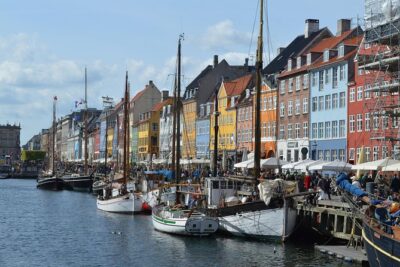
3h walking tour, small group max 10 people Copenhagen
Read our review →
Copenhagen Walking Tour: Highlights and Hygge w/Lunch
Read our review →
Browse the lists this tour appears in