
Reviewed · COPENHAGEN TOURS
Copenhagen: Guided Architecture and Sustainability Tour
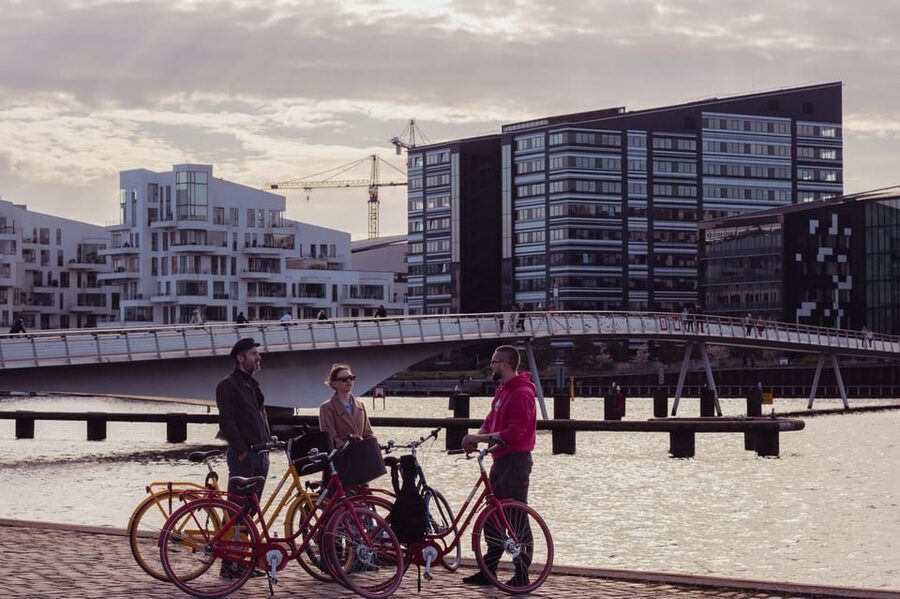
Copenhagen’s best architecture tour is not a march between grand buildings. It is a 17-kilometer bike ride through former industrial areas, harbor paths, new housing projects, and leafy open space. You see how the city mixes old and new, then hear why those choices matter to people who live here.
I especially like the ride through Ørestad and the harbor, where bold buildings meet practical questions about housing, transport, and public space. I also like the local guides, including René, Jörn, John, and Josephine, who add personal stories rather than simply reciting dates. The main drawback is that this is a long ride, and one past participant found that group management could be better when riders became separated.
Key points to know before booking
- About 17km by bike: You need to be comfortable riding for three hours, not just pedaling between nearby sights.
- Modern Copenhagen takes center stage: The focus is strongest on 21st-century architecture and urban planning.
- A different route through the city: You reach harbor districts, Ørestad, Amager Fælled, and housing projects that many first-time visitors miss.
- English or German guidance: Guides such as René, Jörn, John, and Josephine bring different personalities to the route.
- Useful equipment is included: You get a bike, helmet, rain poncho, luggage storage, and access to a lounge with toilets.
- Extra equipment costs more: Phone holders, baskets, electric bikes, cargo bikes, tandems, and child seats require an added fee or advance booking.
Why Copenhagen makes sense from a bicycle
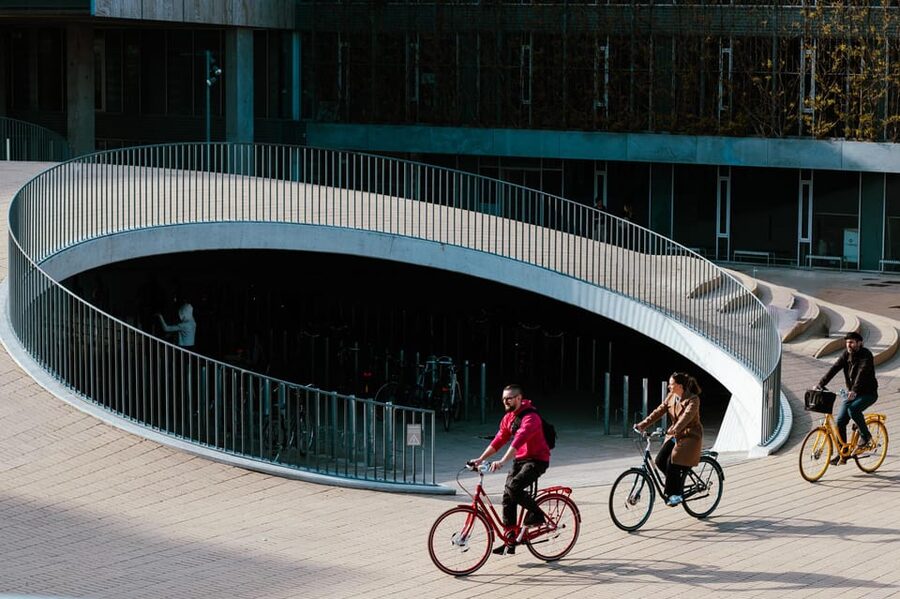
Copenhagen is easy to admire from street level, but a bike shows you how the city works. You move from a historic center to a harbor bridge, then into new districts and open spaces without spending the day waiting for buses or crossing major roads on foot.
The ride also fits the subject. A lecture about sustainable transport feels more convincing when you are using the city’s cycling network yourself. You see how bikes connect neighborhoods, housing, public spaces, and waterfront areas.
This is not mainly a tour of royal buildings or old churches. If you want Copenhagen’s classic postcard sights, you should pair this experience with a separate walking tour. Here, the emphasis is on modern design, public life, and the decisions behind city planning.
A few more tours around Copenhagen worth a look
- Copenhagen: Canal Cruise with Guide
★ 4.6 · 9,115 reviews - Copenhagen: Highlights 3 Hour Bike Tour with a Local Guide
★ 4.8 · 2,312 reviews - Copenhagen Sightseeing Classic Canal Tour With Live Guide
★ 4.5 · 1,906 reviews
Starting at Tropical Bikes
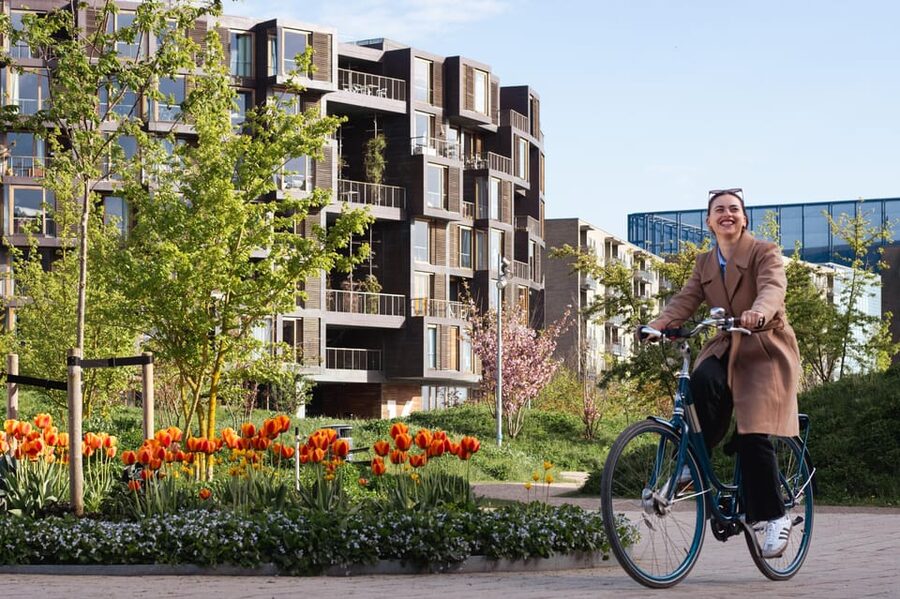
The main starting point is Tropical Bikes at Vester Voldgade 2A, though your exact meeting point can depend on the option you book. Allow time to get fitted to your bike and ask questions before setting off.
Bikes are available in 48cm, 51cm, and 56cm frame sizes. Children’s bikes with 24-inch and 26-inch frames are available, but you need to reserve them ahead of time. The standard setup includes a helmet, and the shop has luggage storage plus a comfortable lounge and toilets before and after the ride.
You can buy a basket or phone holder on site for 49 DKK each. That phone holder may be useful if you want to follow your own map before or after the tour, but neither item is part of the basic price.
Special bikes cost extra. An e-bike is 249 DKK, a cargo or tandem bike is 449 DKK, an e-cargo bike is 649 DKK, and a child seat is 119 DKK. Ask about these when booking, since the tour provider says they should be reserved in advance.
Blox and Lille Langebro: design beside the old city
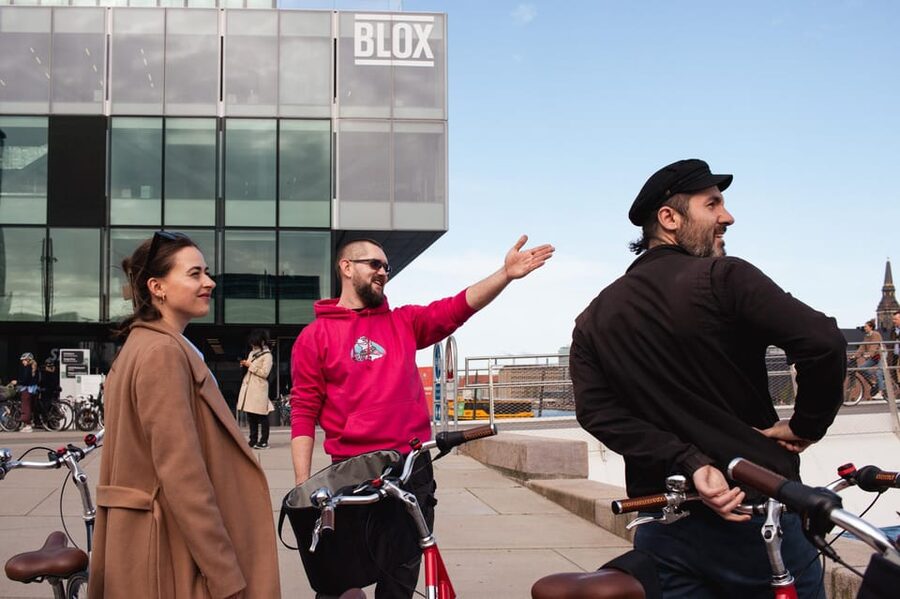
The first major stop is Blox, a modern building near Copenhagen’s waterfront. It is a good opening lesson because it places new architecture close to older parts of the city. Your guide uses the building to explain how Copenhagen has added new design without abandoning its established urban form.
You spend about 10 minutes here. That is enough time for an introduction and some context, though not enough for a detailed architectural study. The value comes from hearing how a building fits into the city rather than simply taking a photograph.
Next comes Lille Langebro, a sleek pedestrian and cycling bridge. The stop lasts about five minutes, with a scenic ride as part of the experience. Pay attention to how the bridge supports daily movement, not just sightseeing. This is the kind of structure that makes Copenhagen’s cycling culture visible in practical terms.
The route is already showing its main idea: architecture matters because it affects how easily you move, meet, live, and use the waterfront.
Islands Brygge and the harbor’s new public life
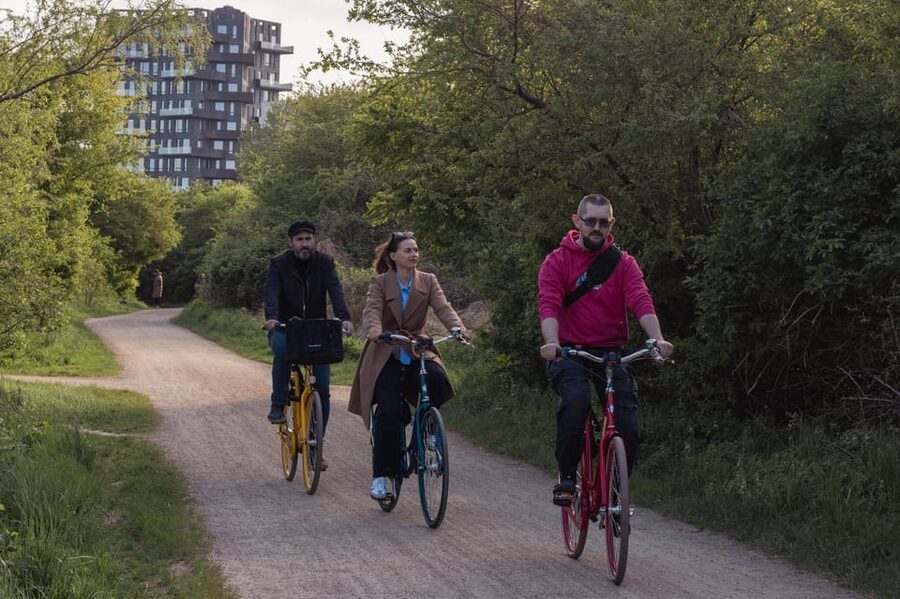
At Havnebadet Islands Brygge, you spend about 10 minutes. The harbor here is a useful example of Copenhagen turning former working areas into public spaces. The focus is not only on what was built, but on how the water has become part of everyday city life.
Your guide may connect the harbor bath to Copenhagen’s broader effort to make the waterfront accessible. The stop also gives you a break from constant riding and a chance to look at the relationship between open water, housing, paths, and public recreation.
This part of the route helps explain why the tour is different from a standard architecture outing. You are not simply looking at façades. You are considering who gets to use a place and what makes a city feel pleasant at street level.
Same city, a different sort of afternoon:
- Copenhagen: Hop-On Hop-Off Bus Tour with Boat Tour Option
★ 3.9 · 4,122 reviews - Private Walking Grand Tour of Copenhagen
★ 5.0 · 3,953 reviews - From Copenhagen: Lund and Malmö 2-Country Tour
★ 4.7 · 2,772 reviews - Copenhagen Highlights Walking Tour
★ 5.0 · 2,324 reviews
Ørestad and Karen Blixens Plads
Karen Blixens Plads is one of the more memorable stops. You spend about 10 minutes here, then ride through Ørestad, a district known for bold modern buildings and large-scale planning.
The architecture in Ørestad can feel striking, even unusual. It is also a good place to ask harder questions. How do large new developments connect to the rest of the city? How do they balance strong visual design with comfortable daily living? Your guide presents the choices and compromises that shaped the area.
A short scenic portion of the ride takes you through Ørestad before the next stop. Do not expect every building to be examined in detail. The tour gives you a broad view of the district, with selected stops rather than a building-by-building study.
That broad approach suits people who want to understand Copenhagen’s growth. Architecture fans who want technical detail about every architect may find the pace more general.
Tietgen Residence Hall and Amager Fælled
The Tietgen Residence Hall receives about 10 minutes of guided attention. Its circular form makes it one of the route’s most distinctive buildings, and it gives your guide a chance to talk about housing, shared space, and student life.
This stop also shows why the tour is useful for anyone interested in how buildings serve people. A striking shape is only part of the story. The more useful question is how residents enter, meet, and use the building.
The ride then reaches Amager Fælled, where you spend another 10 minutes. This open area changes the mood completely. After new buildings and engineered public spaces, you get a sense of how open land fits into Copenhagen’s plans.
The contrast is important. Sustainable city planning is not only about energy-efficient buildings or bike routes. It also involves deciding where development should stop and where open space should remain.
Gemini Residence and Cykelslangen
E/F Gemini Residence gives you another look at how older industrial structures can be adapted for housing. You spend about 10 minutes here, examining a building that reflects Copenhagen’s shift from working waterfront to mixed urban district.
This is one of the route’s better examples of reuse. Instead of treating industrial architecture as something to remove, the city has found ways to give it a new role. Your guide can explain the tension between keeping character and creating modern homes.
Cykelslangen follows as a scenic cycling section of about five minutes. The name refers to the bicycle route’s sweeping form, and riding it gives you a direct sense of how cycling paths can be designed as real transport routes rather than painted lines squeezed beside cars.
This stretch may be one of the most enjoyable parts for riders. It connects the subject of the tour to your own movement, making the city’s bike-first approach something you feel rather than just hear about.
Kaktus Towers and the cost of striking design
Kaktus Towers is another 10-minute guided stop. The towers are hard to miss, with an angular appearance that reflects Copenhagen’s willingness to experiment with housing design.
The stop also invites a practical question: does bold architecture improve daily life, or does it mainly create a memorable skyline? That is the kind of question worth asking on this tour. You receive context about the design and its place in the city, but you should not expect a full technical critique or access inside every building.
This is also where the tour’s focus on modern architecture becomes clearest. If your main interest is medieval Copenhagen, this route will not meet that need. If you enjoy seeing new housing and public projects in their real setting, Kaktus Towers is a strong part of the ride.
Enghave Plads and Israels Plads
At Enghave Plads, the tour returns to a public square shaped for urban life. You spend about 10 minutes here, considering how a neighborhood space can support people rather than simply provide a road junction or decorative area.
The point is not that every new project works perfectly. Copenhagen’s urban choices involve trade-offs, and the guides discuss the city’s efforts, problems, and changes over time. John has been praised for explaining how Copenhagen struggled with the choices that helped shape the city it is today, which is the right tone for this subject.
The final major stop is Israels Plads, also about 10 minutes. This space shows how an older urban area can be reshaped with environmental concerns and public use in mind. It also brings the ride back toward the central city, making it a sensible final stop before returning to the bike shop.
You finish with a better sense of how different parts of Copenhagen connect. The city’s sustainable image is not produced by one building or one policy. It comes from many decisions about streets, housing, bridges, water, and public space.
What the guides add to the ride
The guide can make or break an architecture tour. Here, the named guides bring different strengths. René has a warm, safety-minded approach and makes sure the group is comfortable on the bikes. Jörn has been praised for adding information beyond what you would find in a quick online search. John brings a thoughtful account of the choices and difficulties behind Copenhagen’s development.
Josephine is especially appealing for architecture fans. She explains the subject clearly, adds humor, and keeps the ride from feeling like a formal classroom. Other guides may lead the same route with a different emphasis, so expect the exact storytelling style to vary.
The official tour languages are English and German. You can book a private group if you want a more personal format, though the available details do not specify the private group size or its exact price.
One practical point deserves attention: stay close to the guide. A past participant felt that group management was weak when some riders became separated. Most of the route may feel easy to follow, but city cycling requires attention, especially at crossings and turns.
Pace, comfort, and the weather
The tour lasts three hours and covers roughly 17km. That is a moderate but real ride. You do not need to be a racing cyclist, but you should be able to ride comfortably for an extended period and stop, start, and turn in an urban setting.
The tour operates in any weather. Wear practical clothing and comfortable shoes, and be ready for rain, wind, or a cool harbor breeze. A rain poncho is included in case of rain, but you should still dress suitably rather than relying on the poncho alone.
The bikes come in several frame sizes, which helps with comfort. Families can request children’s bikes in advance. People who cannot ride a bike should not book this experience, and anyone with doubts about a 17km ride should consider an e-bike, available for an additional fee.
Is the $70 price fair?
At $70 per person, this is not the cheapest way to see Copenhagen. The price makes more sense when you count the three-hour guide service, bike rental, helmet, stops across several districts, and the chance to cover far more ground than you could on foot.
You also avoid paying separately for basic bike hire. The included luggage storage, toilets, lounge, and rain poncho are small but useful touches, especially if you are fitting the ride into a busy day.
The extra charges can raise the final cost. A basket or phone holder is 49 DKK each, and special bikes cost more. Still, the standard tour offers solid value for people who want architecture explained in context rather than simply photographed.
The strongest value comes from the route itself. You reach places you might not choose on your own, including Amager Fælled, E/F Gemini Residence, Cykelslangen, and parts of Ørestad. A self-guided ride could cover some of them, but you would miss the connection between the buildings and Copenhagen’s planning goals.
Who should book this Copenhagen bike tour?
I would choose this for anyone who has already seen the main center and wants another side of the city. It also suits architecture students, urban planning fans, cyclists, and visitors curious about how sustainability affects ordinary life.
It works well for couples, families with older children who can manage the distance, and private groups that prefer a more tailored experience. The children’s bike option is helpful, but you must arrange it ahead of time.
I would skip it if you dislike cycling, want a slow walking tour, or mainly care about historic monuments. The ride is active, the weather can be unpredictable, and the strongest material concerns modern Copenhagen rather than its earlier architectural periods.
The tour has a 4.8 rating from 73 reviews, with repeated praise for the guides, bike quality, safety care, and access to less familiar parts of the city. One note of caution remains: keep the group in sight and speak up if the pace or route becomes unclear.
FAQ
How long is the Copenhagen architecture and sustainability tour?
The tour lasts three hours and covers roughly 17km by bicycle.
What languages are available?
The live guide is available in English or German.
What is included in the tour price?
The price includes a local guide, a bike, a helmet, a rain poncho, luggage storage, and access to a lounge with toilets before and after the ride.
Can children join the tour?
Children can use 24-inch or 26-inch bikes, but you must reserve the children’s bikes in advance.
Can I use an electric bike or child seat?
Yes. An e-bike, cargo bike, tandem bike, e-cargo bike, and child seat are available for an additional charge and should be reserved ahead of time.
What happens if it rains?
The tour runs in any weather. A rain poncho is provided, but you should wear suitable clothing and comfortable shoes.
Should you book it?
Book this tour if you want Copenhagen explained through buildings, bike paths, harbor spaces, and daily life rather than through famous monuments alone. The route is active, the guide quality is a major part of the experience, and the mix of modern projects with open space gives you a useful picture of the city’s priorities.
At $70, it is a fair buy for a three-hour guided ride that reaches several districts and includes the bike and basic gear. Just dress for the weather, reserve any special equipment early, and make sure a 17km ride sounds enjoyable before you commit.
Just added in Copenhagen
- Copenhagen City & Christiansborg Palace Private Walking Tour★ 4.6 · 23 reviews
- Copenhagen Craft BeerWalk City Center★ 4.4 · 3 reviews
- Copenhagen Christianshavn Walking Tour★ 5.0 · 5 reviews
- Copenhagen: Canal Boat Cruise & Old Town/Nyhavn Walking Tour★ 4.5 · 4 reviews
- Copenhagen: Express Walk with a Local in 60 minutes★ 4.6 · 3 reviews
- Copenhagen: 3 Hour Extended Grand E-Bike Guided Tour★ 4.6 · 3 reviews
- Copenhagen: 3-hour Private Guided Bike Tour★ 4.7 · 6 reviews
- Best of Copenhagen Biking Tour-3 Hours, Small Group max 10★ 4.9 · 10 reviews
Copenhagen Tours, compared.
Hop-On Hop-Off Bus Tour with Boat Tour Option
Read our review →
Highlights 3 Hour Bike Tour with a Local Guide
Read our review →
Hamlet and Sweden Tour – Two Countries in one day !
Read our review →
Browse the lists this tour appears in