

Reviewed · AARHUS TOURS
Surprise Walk of Aarhus with a Local
Aarhus is easy to like, but a short local walk helps you understand how its waterfront, old lanes, art scene, and historic center fit together. This 90-minute tour moves from the equestrian statue of Christian X to Dokk1, Møllestien, the Latin Quarter, and Aarhus Cathedral, with a rooftop recommendation along the way.
I like the small group of up to eight, which gives you a better chance to ask questions and adjust the pace. I also like the personal touch: guides such as Maj-Britt bring local knowledge of Aarhus and its art scene, and one guide has been known to welcome the group with a small Danish specialty.
The main drawback is the price, $126.29 per person, for a walking tour that lasts only about an hour and a half. You also need to be comfortable walking on cobblestones, since the tour is not recommended for people with impaired mobility.
Key points to know before booking
- Dokk1 anchors the tour: You see Aarhus’s striking waterfront library and culture center, not just the usual old-town sights.
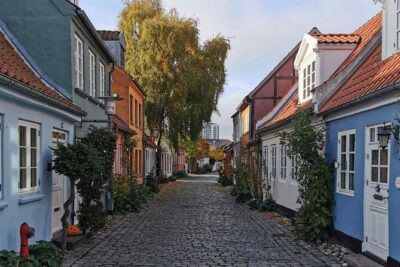
- Møllestien brings old Aarhus to life: The cobblestone lane and small houses offer one of the city’s most appealing photo stops.
- The route ends at Aarhus Cathedral: You finish beside Denmark’s longest and tallest church.
- A rooftop tip is part of the value: Your guide recommends where to find one of Aarhus’s best city views.
- The group stays small: With a maximum of eight people, the guide can respond to your interests and walking speed.
- The route can change: Weather and the group’s pace may affect which stops you see or how long you spend at them.
A fast first look at Aarhus
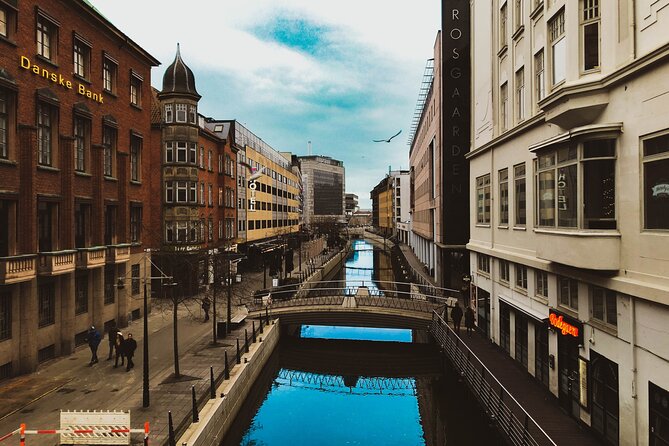
This experience is built for a first visit. It does not try to cover every museum or explain every period of Danish history. Instead, it gives you a quick cross-section of Aarhus: modern waterfront architecture, creative reuse of an old railway building, picturesque lanes, an old quarter, and a major church.
That mix is the tour’s strongest idea. Aarhus is not only a historic Danish city. It is also a university city, a cultural center, and a place where old buildings sit beside newer public projects. In a short walk, you get several different views of the city.
You meet at the equestrian statue of Christian X in central Aarhus. The tour ends at Aarhus Cathedral on Store Torv, so the route is practical if you want to continue sightseeing in the center afterward.
The start and end points are near public transportation, but transportation is not part of the tour. You should plan to walk between the stops and pay for any bus, train, museum, or monument entry separately.
A few more tours around Aarhus worth a look
- Aarhus Walking Tour: From Viking Village to Metropolis
★ 4.8 · 122 reviews - Street Art and Rooftops of Aarhus, Denmark
★ 5.0 · 62 reviews - The Ancient Viking Stronghold of Aros: A Self-Guided Audio Tour in Aarhus
★ 4.0 · 36 reviews
Dokk1 gives the tour a modern start
Dokk1 is one of the most useful stops on the route because it shows present-day Aarhus rather than only its past. The building serves as a public library, government building, and culture center beside the waterfront. It sits near the Custom House on Hack Kampmanns Plads.
You can think of Dokk1 as a civic building as much as a sightseeing stop. It helps explain how Aarhus uses its waterfront for public life, culture, and daily services. Your guide can point out what makes the building worth noticing and place it within the wider city center.
This is also the stop that may interest visitors who enjoy architecture and public spaces. You are not simply looking at an old façade. You are seeing a working part of the city.
The trade-off is that this is primarily an exterior city stop unless your guide and the day’s conditions make a different arrangement possible. Entry to museums and other buildings is not included, so do not book this walk expecting a full indoor tour of Dokk1.
One particularly useful detail from the guide experience is the emphasis on Aarhus as a livable city. Maj-Britt, one guide named in the feedback, was praised for her fluent English, energy, and personal connection to her hometown. That kind of local perspective can make a civic building feel less like a photo stop and more like a clue to how the city works.
An old railway station becomes an art stop
The route includes an old railway station that has been repurposed as an alternative art center. This gives the walk a different mood from the waterfront and historic streets.
Adaptive reuse is often one of the best ways to understand a city’s creative side. Instead of treating older buildings as frozen monuments, Aarhus has found another use for this one. You get a quick look at the city’s art culture and at the way former transport spaces can take on a new public role.
This stop is also singled out as a good place for a photo. If you enjoy urban design, street scenes, or Instagram-friendly backdrops, have your camera ready. The tour information does not promise admission to exhibitions, so treat this as a guided exterior or quick art-center visit unless your guide tells you otherwise.
The stop may appeal most to you if you want more than churches and old houses. It gives the walk a creative edge, and it ties in with the art knowledge that made one of the guides especially useful to past participants.
Møllestien offers the postcard view of old Aarhus
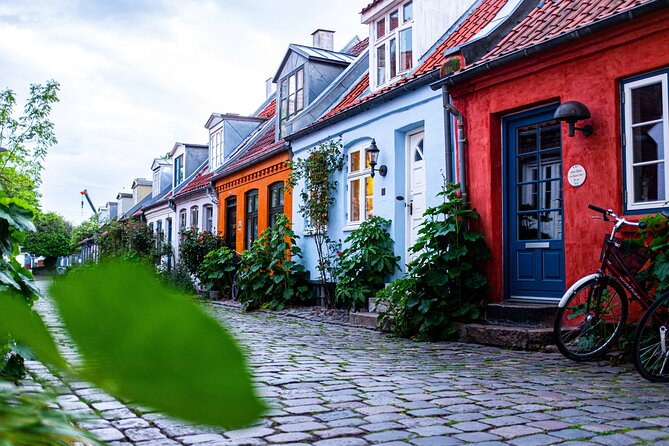
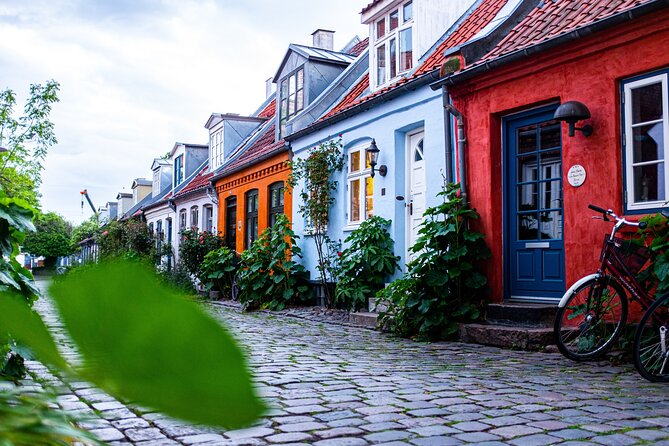
Møllestien is likely to be the most immediately charming part of the route. It is a narrow cobblestone street lined with quaint houses, the kind of place that gives you the classic Danish feel many people hope to find on a city walk.
Here, the pleasure is simple. You slow down, look at the small façades, and notice how different the lane feels from the larger streets. The guide’s stories can help keep the stop from becoming only a quick photograph. You may learn how this part of Aarhus fits into the city’s older residential fabric.
The cobbles are also the practical warning. They can make walking less comfortable, especially for anyone with impaired mobility. The tour specifically says it is not recommended for guests with mobility limitations, and Møllestien is one reason to take that advice seriously.
Allow yourself a moment to enjoy the contrast. Dokk1 shows civic Aarhus in the present day. Møllestien gives you a much smaller, quieter picture of the city. That change of scale is one of the best features of the route.
Same city, a different sort of afternoon:
- Aarhus Walking Tour: Explore Top Sights & Hidden Gems
★ 4.0 · 34 reviews - Aarhus Craft BeerWalk
★ 4.7 · 19 reviews - Time travel in Aarhus
★ 4.5 · 18 reviews - Explore Aarhus in 60 minutes with a Local
★ 4.0 · 14 reviews
The Latin Quarter adds old buildings and local character
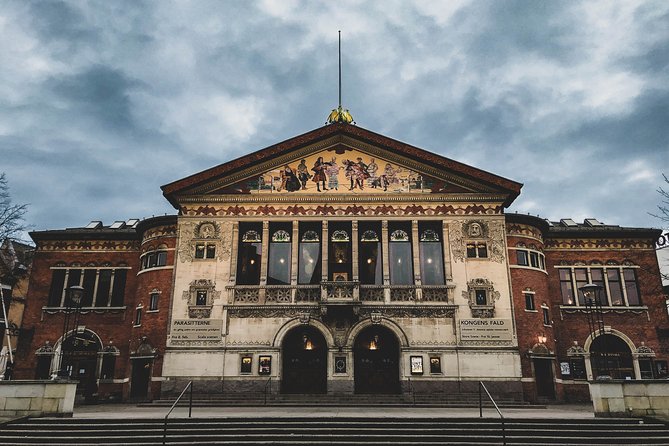
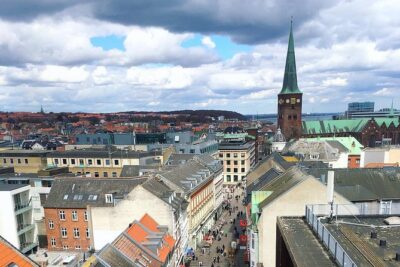
The tour also visits the well-known Latin Quarter, a central area with charming old buildings. This is a useful bridge between Møllestien and the cathedral because it gives you a broader sense of the historic center rather than focusing on one lane alone.
Your guide can help you read the area as part of everyday Aarhus. You will see older buildings and streets that are attractive in their own right, but the real value is the context. A local can point out which corners matter, where the area connects to the rest of the center, and what might be worth returning to later.
The itinerary is intentionally flexible. Stops may vary with the weather, and the guide adapts the route to the group’s interests and walking pace. That flexibility is helpful if you want to spend more time on architecture, art, or local recommendations. It also means you should not expect every stop to receive the same amount of time.
If you prefer a tightly timed route with exact stop durations, this may feel a little loose. If you like asking questions and following a guide’s local judgment, the format works better.
A rooftop recommendation adds practical value
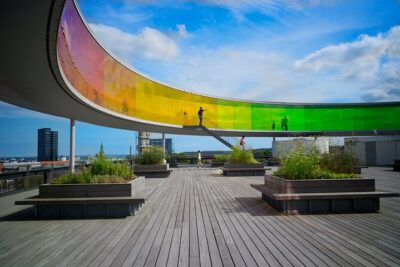
One of the stops centers on a rooftop with some of Aarhus’s best views. The exact rooftop is not named in the tour information, so you should ask your guide for the current recommendation and check whether access requires a separate purchase.
This is a small but useful feature. A good local tip can save you time after the tour, especially when you are deciding where to see the city from above. The guide may also be able to explain the best time to visit or how the view fits with the rest of your day, though those details are not guaranteed.
Do not treat the rooftop stop as a full rooftop visit with admission included. The stated inclusions cover a local guide, a small group, and personal recommendations. Personal expenses and entry tickets are extra.
Still, this kind of advice can improve the value of a short tour. You are not only collecting landmarks. You are getting help planning what to do next.
Aarhus Cathedral is a strong finish

The walk ends at Aarhus Cathedral on Store Torv. It is Denmark’s longest and tallest church, so the final stop has real visual weight after the smaller streets and modern waterfront.
Ending here also makes practical sense. You finish in a central square, close to other sights, cafés, and transport connections. If you want to continue exploring on your own, the cathedral area is a convenient place to begin the next part of your day.
The tour does not include monument entry, so do not assume you will receive an interior visit or ticket. The guide can still give you useful context from outside, and you can decide later if you want to return for a closer look.
I like this ending because it gives the route a clear shape. You begin with a central meeting point, move through modern and historic Aarhus, then finish at one of the city’s most important landmarks. For a 90-minute introduction, that is a sensible progression.
Small-group attention makes the short format work
The maximum group size is eight people. That matters here because the tour is short. A large group would make it harder to ask questions, hear the guide, or adjust the route without losing time.
With a small group, you can ask for restaurant, sightseeing, or rooftop suggestions that match your plans. The included personal recommendations are not a formal planning service, but they can help you decide what to do after the walk.
The guide is an independent local rather than a large tour-company staff member. That can make the tone more personal, though the experience may vary with the individual guide. Maj-Britt is specifically named in the feedback and is described as fluent in English, energetic, and enthusiastic about Aarhus. Another guide was praised for art knowledge and for bringing a small Danish specialty to the meeting point.
Those details suggest a friendly, personal approach, but they do not guarantee the same guide or welcome on every date. If having a particular guide matters to you, confirm availability before booking.
Is $126.29 fair for 90 minutes?
At $126.29 per person, this is expensive for a short walking tour. You are paying for a small group, a local guide, route flexibility, and personal recommendations rather than for entry tickets or transportation.
The price makes more sense if you value personal attention and have limited time in Aarhus. A first-time visitor arriving for a short stay can use the walk to get oriented quickly, identify places worth revisiting, and ask for advice that a self-guided map will not provide.
The value is weaker if you mainly want access to buildings or a long historical lecture. Dokk1, the art center, and Aarhus Cathedral do not come with admission, and the tour lasts only about 90 minutes.
Group discounts may be available, which could improve the cost for people booking together. Check the current price before you pay, since the stated amount is per person and pricing can change.
Who will enjoy this Aarhus walk?
I would recommend it most for:
- First-time visitors who want a quick orientation
- People with only a few hours in central Aarhus
- Small groups who prefer questions and conversation
- Visitors interested in architecture, art, and city life
- Anyone who wants local suggestions for a rooftop or later sightseeing
I would be more cautious if you dislike cobblestones, have impaired mobility, or want a relaxed tour with long stops inside museums and churches. The pace is designed to cover several places quickly, and weather may change the route.
The tour suits an early part of your stay particularly well. You can use the guide’s suggestions to shape the rest of your visit. It can also work near the end of a short city break, when you want one final walk through the center, though you will have less time to act on the recommendations.
Booking, cancellation, and practical details
You receive confirmation at booking, and mobile tickets are supported. Service animals are allowed, and the meeting and end points are near public transportation.
Free cancellation is available if you cancel at least 24 hours before the start time. Cancellations within 24 hours are not refunded, and changes made inside that period are not accepted. The cut-off follows local time in Aarhus.
Wear shoes you can manage on cobblestones and allow enough time to reach the equestrian statue of Christian X. Since the itinerary can respond to weather and walking pace, keep a little flexibility in your schedule after the tour.
Should you book it?
Book this tour if you want a fast, personal introduction to Aarhus and value a small group more than included admissions. The combination of Dokk1, the old railway art center, Møllestien, the Latin Quarter, the rooftop tip, and Aarhus Cathedral gives you a useful first picture of the city.
Skip it if $126.29 feels high for 90 minutes, or if you want extensive indoor sightseeing. For the right visitor, the best part is not simply ticking off landmarks. It is getting a local guide’s sense of how modern, creative, and historic Aarhus connect.
FAQ
How long does the Surprise Walk of Aarhus last?
The tour lasts approximately 1 hour and 30 minutes.
Where does the tour start?
It starts at the equestrian statue of Christian X in Aarhus, Denmark.
Where does the tour end?
The tour ends at Aarhus Cathedral on Store Torv in Aarhus.
How many people can join the tour?
The group has a maximum of eight people.
Is transportation included?
No. Transportation tickets are not included. Any bus or train costs are paid separately.
Are museum and monument entry tickets included?
No. Entry tickets for transportation, museums, and monuments are excluded.
Is the tour suitable for people with impaired mobility?
No. The experience is not recommended for guests with impaired mobility, partly because the route includes cobblestone streets.
Can I cancel for a full refund?
Yes, if you cancel at least 24 hours before the experience start time. Cancellations within 24 hours are not refunded.
Can the itinerary change?
Yes. The route may vary with weather conditions, and the guide can adapt the stops to the group’s interests and walking pace.
Just added in Aarhus
- Time travel in Aarhus★ 4.5 · 18 reviews
- Aarhus Private Walking Tour with a Local★ 4.0 · 12 reviews
- Aarhus Self guided Mystery hunt Sabotage in Danish★ 4.5 · 3 reviews
- Explore Aarhus in 60 minutes with a Local★ 4.0 · 14 reviews
- Aarhus: Surprise City Walking Tour with Local Guide★ 4.2 · 9 reviews
- Aarhus: Express Walk with a Local in 60 minutes★ 4.8 · 3 reviews
- Aarhus: Insta-Perfect Walk with a Local★ 4.9 · 4 reviews
- Aarhus: 1 or 1,5 Hour Boat Rental – No License Required★ 4.3 · 8 reviews
Aarhus Tours, compared.

Aarhus Walking Tour: From Viking Village to Metropolis
Read our review →
The Ancient Viking Stronghold of Aros: A Self-Guided Audio Tour in Aarhus
Read our review →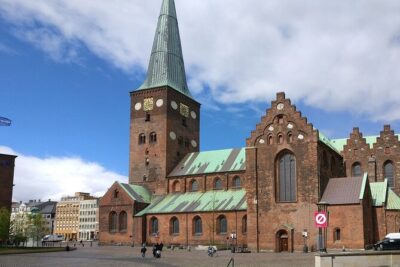
Aarhus Walking Tour: Explore Top Sights & Hidden Gems
Read our review →
Browse the lists this tour appears in